
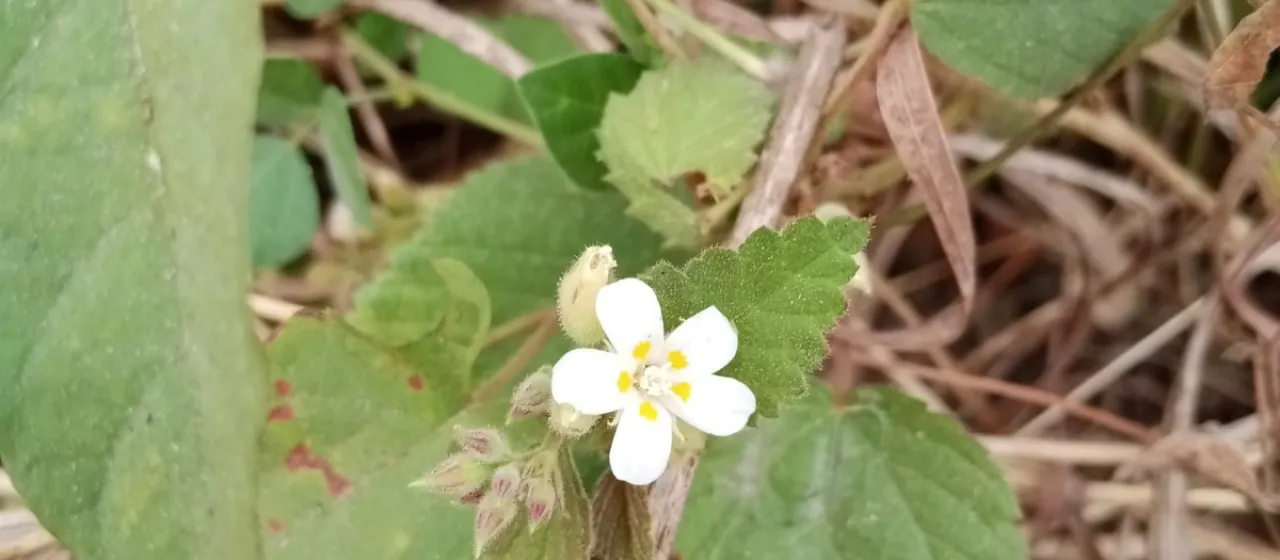
Description
Melochia lupulina is a perennial plant species belonging to the Malvaceae family. This botanical entity is recognized for its adaptive capabilities within tropical environments, serving as a significant element of local vegetation with potential for agricultural application.
The native distribution of this plant includes Central and South America. It thrives in warm, humid regions, typically colonizing areas with sufficient light and moderate soil moisture. Its presence in these habitats is well-documented due to its role in local ecosystems and its response to human-altered landscapes.
Botanically, the plant presents with alternate, serrated leaves and small, distinctive flowers. It develops specialized fruit capsules that facilitate seed dispersal. The overall growth habit is bushy or semi-erect, allowing it to accumulate biomass rapidly during the peak of the growing season.
Agronomically, Melochia lupulina requires stable, warm temperatures and fertile, well-drained soil. It is highly sensitive to frost, which limits its outdoor cultivation to tropical or subtropical zones. Maintaining optimal pH levels and preventing soil compaction are essential practices for maximizing plant health and vigor.
The primary utility of this plant in agriculture relates to soil management and biomass production. Potential threats to the crop involve:
- foliar insect infestation;
- fungal diseases triggered by excessive humidity;
- nutrient deficiencies in poorly managed soils.