
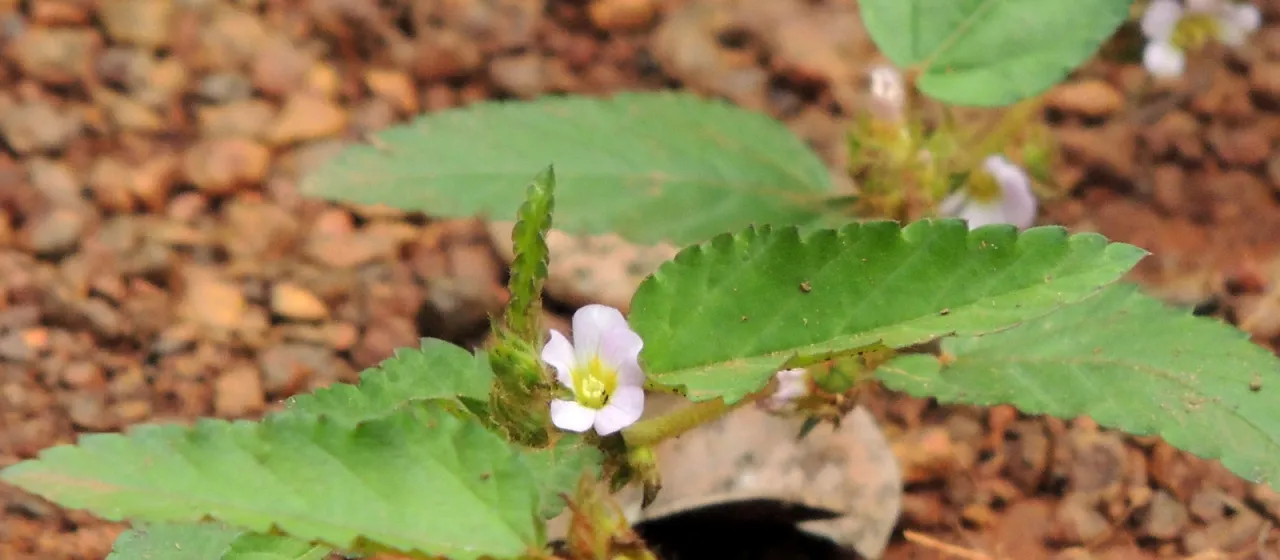
Description
Melochia melissifolia is a perennial herb or subshrub belonging to the family Malvaceae. It is a plant of significant botanical interest due to its relationship with other commercially important malvaceous species. The plant is characterized by its distinct leaf shape which bears a striking resemblance to lemon balm (Melissa), hence its specific epithet.
The plant originates from the tropical regions of the Americas and is widely distributed throughout the Caribbean and neighboring areas. It thrives in humid tropical climates and is typically found in disturbed habitats, secondary forests, and agricultural peripheries. Its natural distribution is strongly tied to areas receiving consistent annual rainfall, which supports its rapid development cycle.
Botanically, Melochia melissifolia features an upright, branched stem structure. The leaves are typically ovate-lanceolate with serrate margins, providing a large surface area for photosynthesis. The reproductive organs consist of small, clustered flowers that are biologically adapted for pollination by small insects. The seeds are light and capable of dispersion via wind and water, which aids in its colonization of new territories.
Agricultural success with this species depends on maintaining high soil moisture levels and warm ambient temperatures. The plant performs best in nutrient-rich, well-draining soils. Proper management requires monitoring of nutrient leaching in tropical soils, necessitating balanced fertilization programs. Pruning and canopy management are often used to maintain yield density in cultivated settings.
- Source of high-quality cellulose for industrial applications.
- Integration into agroforestry systems for soil protection.
- Utility in local herbal medicine practices and ethnobotanical contexts.
- Use as a potential green manure crop in tropical rotations.
Disease management is a critical aspect of Melochia melissifolia cultivation. Common pests include aphids and mites, which can severely stress the plants during dry periods. Fungal pathogens, particularly those causing leaf spots, may become problematic during high-humidity cycles. Integrated pest management (IPM) strategies, including biological control agents and crop monitoring, are essential for ensuring sustainable yields.