
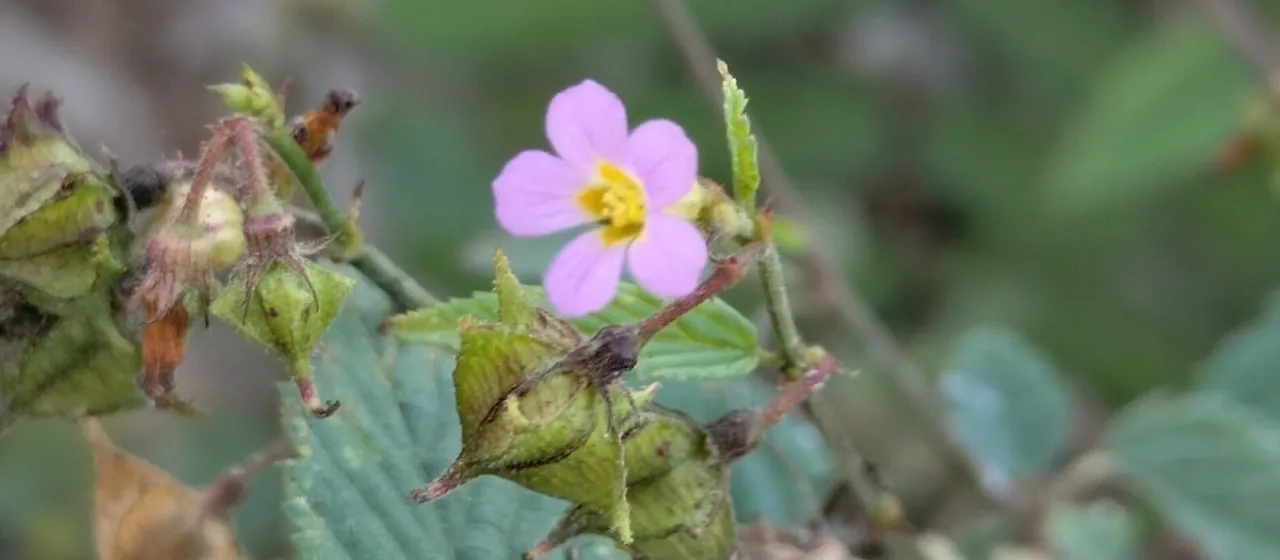
Description
Melochia pyramidata is a perennial herb or small shrub belonging to the Malvaceae family. While it is frequently classified as a weed in agricultural landscapes, it is a plant of significant biological interest due to its ability to thrive in various tropical and subtropical environments across the globe.
The species originated in the tropical regions of the Americas and has subsequently expanded its range to other tropical areas in Asia, Africa, and the Caribbean. It is highly adaptable, often colonizing disturbed sites, pasture lands, and cultivated fields, where it can potentially compete with primary crops for nutrients and sunlight.
Botanically, the plant displays erect or spreading stems and lanceolate-to-ovate leaves with serrated margins. Its small, delicate flowers, which range in color from pink to purple, eventually develop into characteristic pyramidal-shaped capsules. These capsules efficiently store and disperse the plant's numerous small seeds, ensuring its survival across changing seasons.
In terms of agricultural management, Melochia pyramidata is known for its high drought tolerance and low demand for soil fertility. It thrives in well-drained, sunny habitats. Control of this plant in an agricultural setting is typically achieved through integrated weed management, including mechanical tilling, mowing before seed dispersal, and selective herbicide application where permitted.
While often treated as an invasive plant, research into its potential uses continues to expand, offering insights into different agricultural applications:
- Role in traditional livestock feed in certain tropical subsistence systems.
- Investigations into its biochemical profile for pharmaceutical development.
- Potential use as a source of biomass in specific ecological restoration projects.