
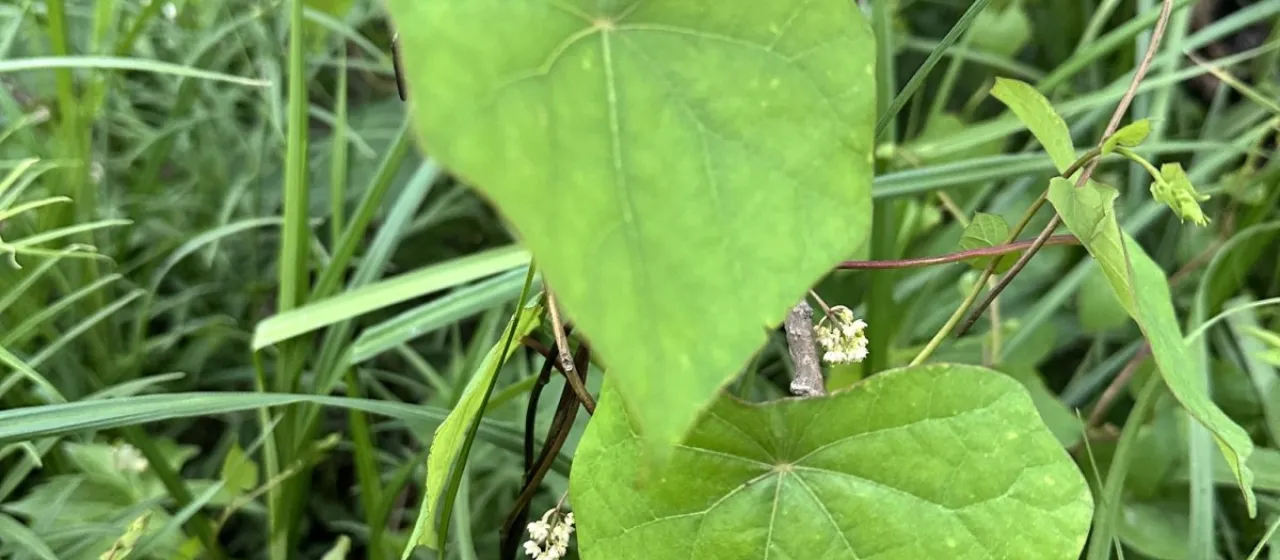
Description
Asiatic moonseed (Menispermum dauricum) is a perennial woody vine belonging to the family Menispermaceae. This plant is recognized for its ornamental value in landscaping and its significant chemical profile, which has been the subject of botanical and medicinal studies for many years.
The species is native to East Asia, including regions across Russia’s Far East, China, Japan, and Korea. In its natural habitat, it thrives in forested areas, riverbanks, and shrubby thickets. It has demonstrated remarkable hardiness, allowing it to adapt to various temperate climate zones throughout the world when provided with suitable growing conditions.
Botanically, the plant is characterized by its twining stems that can reach heights of several meters, supporting broad, palmately-lobed leaves. Its flowers are small and dioecious, appearing in panicles during early summer. The fruits are dark, crescent-shaped drupes that give the plant its common name and distinct visual appearance during the ripening phase.
Successful cultivation requires a location with partial shade and moist, well-draining soil rich in organic matter. The vine is relatively low-maintenance but requires sturdy support structures such as trellises or fences to develop fully. Pruning is recommended in early spring to remove dead wood and encourage vigorous new growth for the coming season.
The plant is primarily utilized in horticulture for its dense foliage, which provides excellent vertical screening. Medicinally, the rhizomes contain specific alkaloids, such as dauricine, which are utilized in various pharmaceutical preparations. It is critical to note that while the roots have medicinal properties, the berries are toxic and should never be ingested.
- Excellent choice for vertical landscaping
- High cold tolerance
- Requires structural support
- Caution: berries are poisonous