
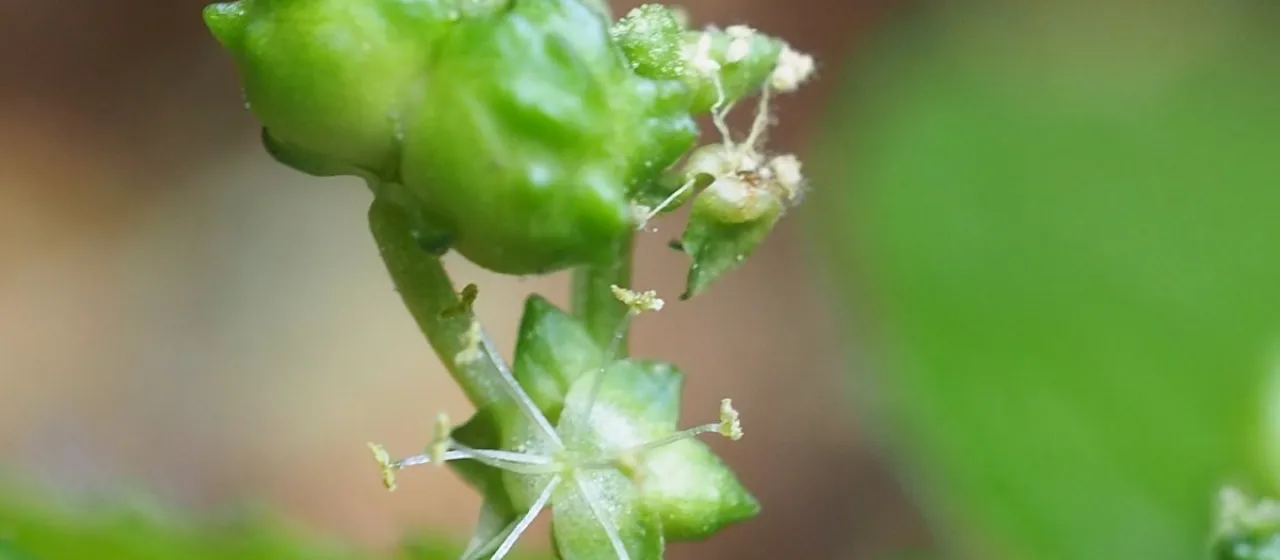
Description
Smooth-fruited mercury (Mercurialis leiocarpa) is a perennial herbaceous plant belonging to the Euphorbiaceae family. This species is distinguished by its unique smooth fruits, setting it apart from other members of the genus. As an agricultural or specialty crop, it is valued for its specific phytochemical profile and adaptation to forest understory environments.
The native range of this plant is centered in East Asia, encompassing Japan, Korea, and parts of China. It typically thrives in moist, shaded environments, such as forest edges or wooded slopes. In a cultivated setting, it requires conditions that mimic this temperate forest habitat to ensure optimal growth and chemical yield.
From a botanical standpoint, Mercurialis leiocarpa features erect, simple stems and opposite, lanceolate leaves. It is a dioecious species, meaning individual plants bear either male or female flowers. The root system is rhizomatous, allowing for efficient clonal spread, which is a critical consideration for field density management.
Cultivation requirements include a preference for well-drained, nutrient-rich, humus-heavy soils. Since the plant is sensitive to high-intensity solar radiation, artificial shading or planting under a canopy is recommended for large-scale operations. Consistent soil moisture is vital; however, waterlogging must be avoided to prevent root rot and related fungal pathogens.
In terms of economic utility, the plant is primarily harvested for botanical research and as a component in traditional herbal preparations. Growers must be aware that, like many species in the Euphorbiaceae family, the plant contains sap that can cause skin and eye irritation. Integrated pest management should focus on monitoring for mites and aphids, which are the most common pests found in similar shaded forest environments.
- Thrives in partial to full shade conditions.
- Requires consistent, moderate moisture levels.
- Propagates well through rhizome division.
- Susceptible to damp conditions which encourage fungal infections.