
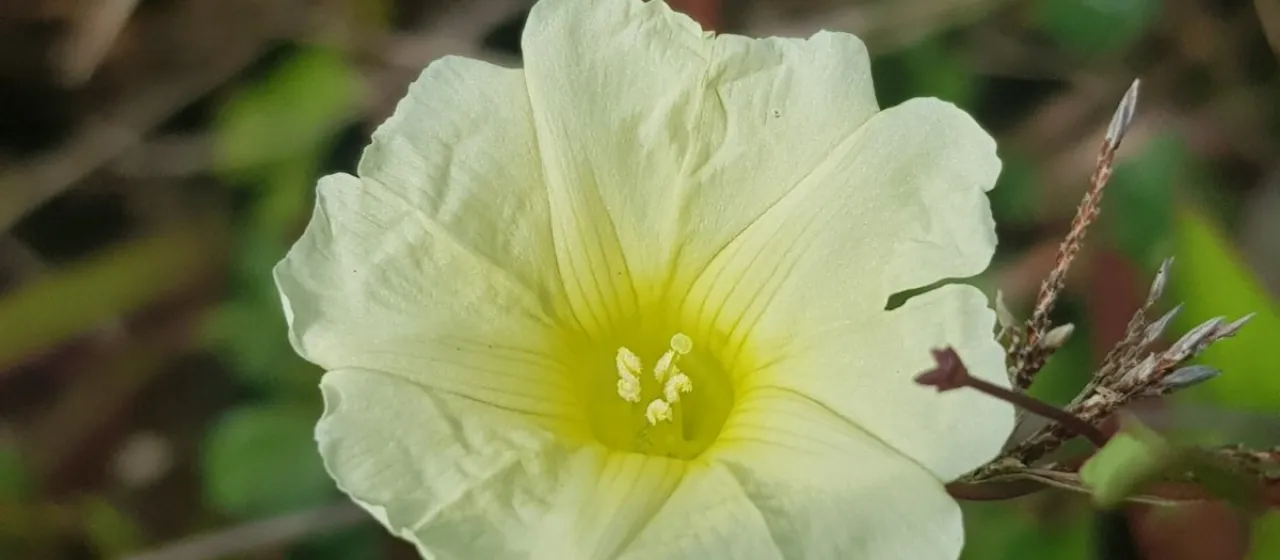
Description
Merremia hirta is a perennial herbaceous plant belonging to the Convolvulaceae family. Widely distributed across tropical and subtropical regions of Asia and Australia, this plant is recognized for its climbing or trailing habit. In agricultural terms, it is increasingly studied for its high biomass production potential and its ecological role in land stabilization.
Botanically, Merremia hirta is defined by its hirsute (hairy) stems and alternate, simple leaves. The flowers are funnel-shaped, typical of the morning glory family, and usually display delicate white or yellowish tones. The root system is robust, providing the plant with the structural support needed to colonize diverse terrain, from open fields to the edges of forest ecosystems.
Regarding climate, this species thrives in warm, humid conditions with minimal temperature fluctuations. It prefers well-drained, nutrient-rich soils but shows remarkable plasticity in surviving in slightly degraded soils. It is not cold-hardy, and sustained exposure to temperatures near or below freezing will severely damage or kill the plant, limiting its agricultural viability to warm climates.
Cultivation practices involve selecting sites with full or partial sun and providing consistent moisture, especially during the establishment phase. While the plant is vigorous, initial weed management is critical to ensure that seedlings have sufficient access to nutrients. Once established, its rapid growth often allows it to outcompete weeds naturally, serving as a living mulch in some agricultural configurations.
- High rate of vegetative expansion.
- Excellent ground cover potential for erosion control.
- Compatibility with various tropical cropping systems.
- Natural medicinal applications in traditional practices.
The main agricultural applications for Merremia hirta include soil cover management and potential use in biomass production for green manure. Common plant health issues include leaf spot diseases and damping-off, which are often exacerbated by poor soil drainage and excessive humidity. Regular monitoring and maintaining adequate airflow between plants are essential to preventing disease outbreaks in intensive planting systems.