
Description
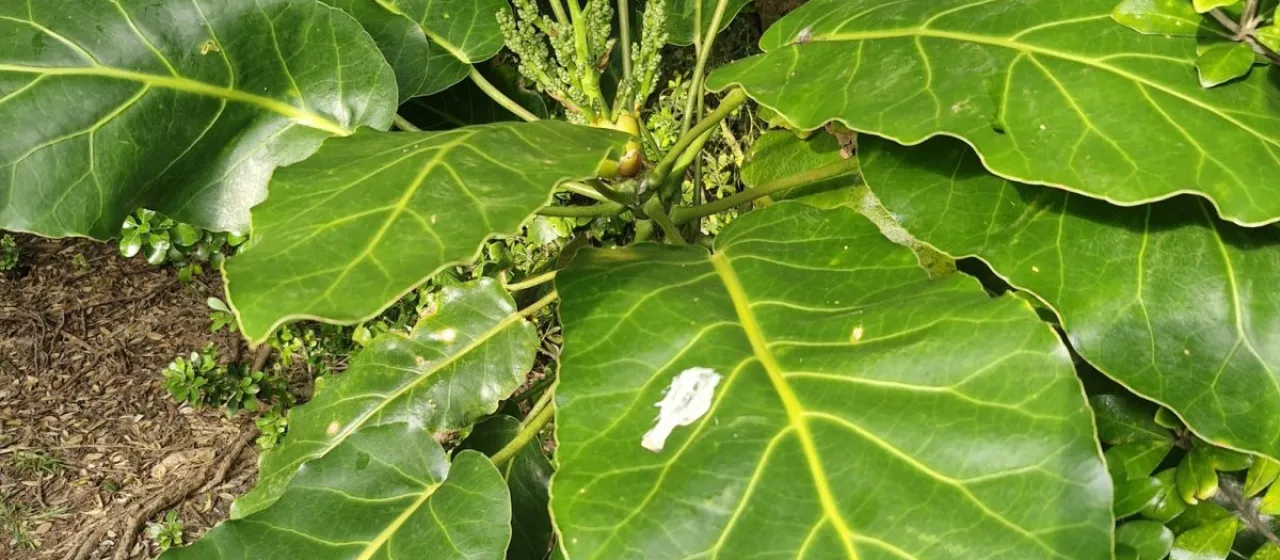
Meryta sinclairii, commonly known as the Puka, is an evergreen tree or large shrub belonging to the Araliaceae family. Recognized for its bold, architectural appearance, the plant features large, glossy, leathery leaves that make it a favorite for landscape design in frost-free climates and as a statement piece in indoor plant collections.
The species is native to the northern offshore islands of New Zealand. In its natural habitat, it thrives in coastal forests, often benefiting from the mild, humid maritime climate. While it is considered somewhat rare in the wild, its popularity as an ornamental has led to its successful introduction into various botanical gardens and specialized nurseries worldwide.
Botanically, the plant typically grows as a small tree reaching several meters in height. Its most defining characteristic is the foliage: broad, oval-shaped leaves that can span up to half a meter in length. The tree produces clusters of small, greenish-yellow flowers, followed by small black fruit, which are technically drupes. Its structural growth habit provides a clean, modern aesthetic.
Cultivation requires specific environmental parameters. Meryta sinclairii prefers bright, indirect light and well-draining, fertile soil. It is sensitive to waterlogging, making drainage an essential component of its care. In temperate zones, it is frequently kept in containers, allowing for better control over soil composition and protection from freezing temperatures, which the plant does not tolerate well.
Pest management is a critical aspect of plant maintenance. Common issues include infestations of scale insects, mealybugs, and spider mites, particularly when grown indoors in dry air. Regular cleaning of the leaves and monitoring the underside of the foliage is recommended. Proper fertilizing during the growing season supports the development of the lush, characteristic foliage.
- Climate preference: Mild, frost-free, high humidity.
- Soil type: Rich, moist, but well-drained loam.
- Maintenance: Avoid overwatering and protect from strong winds.
- Growth habit: Slow to moderate, suitable for large containers.