
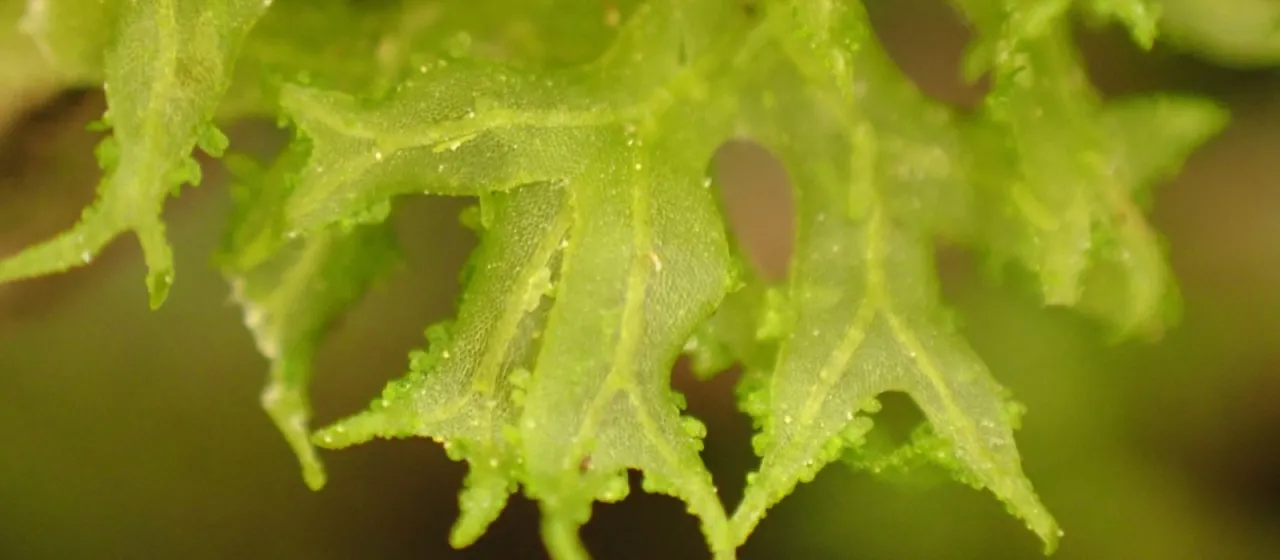
Description
Metzgeria temperata is a species of liverwort belonging to the family Metzgeriaceae. While not an agricultural crop in the traditional sense, this bryophyte serves as a significant organism in ecological studies, providing insights into microclimatic stability and forest health within its native range.
The distribution of this species covers primarily temperate regions, including parts of Europe and North America. It is typically found in humid, sheltered environments, often growing as an epiphyte on the bark of deciduous trees such as ash, alder, and willow, though it can occasionally be observed on damp, shaded rock surfaces.
Botanically, Metzgeria temperata is distinguished by its thalloid structure with dichotomous branching and a clearly defined midrib. The wings of the thallus are unistratose (composed of a single layer of cells). A key reproductive feature is the presence of specialized gemmae (propagules), which facilitate efficient vegetative expansion in stable environments.
Environmental requirements for this species include high atmospheric humidity and protection from direct sunlight and extreme thermal fluctuations. Due to its physiological sensitivity to air pollutants, particularly sulfur dioxide, it serves as a reliable bioindicator for assessing air quality and the overall ecological integrity of forest habitats.
In terms of management and utility, this plant is not subject to traditional agronomic practices but is often monitored in forestry and conservation biology. It is generally not affected by agricultural pests or pathogens; however, its growth can be inhibited by competition with more aggressive lichen or bryophyte species in environments undergoing rapid successional changes.