
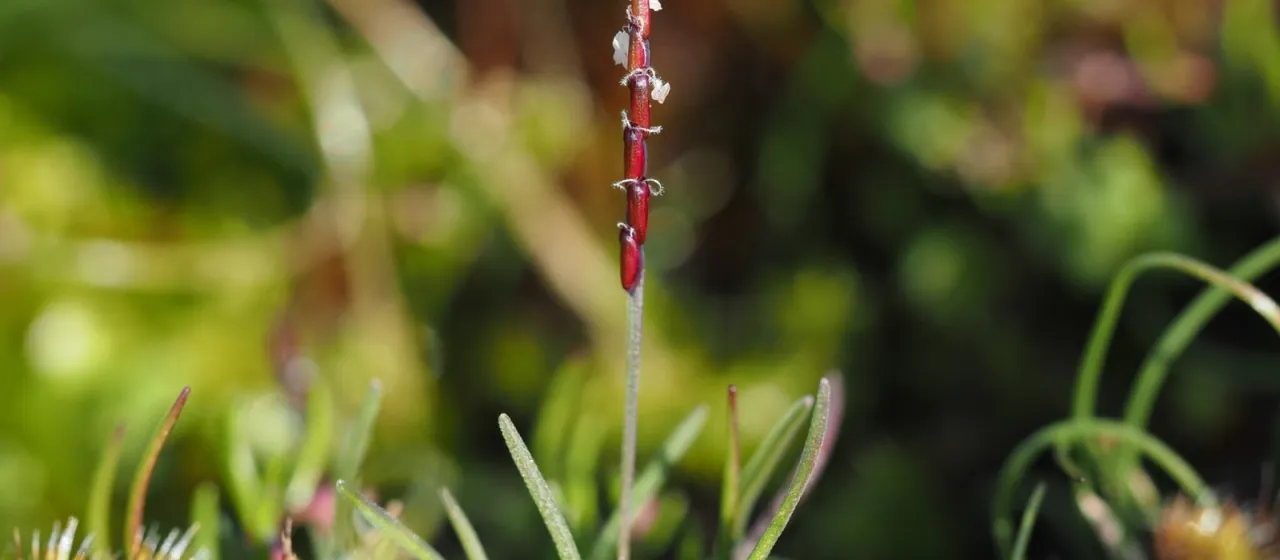
Description
Mibora minima, commonly known as early hairgrass, is an annual grass species belonging to the Poaceae family. It is recognized primarily for its diminutive stature and its ability to thrive in harsh, nutrient-poor environments where larger cereal or forage crops would struggle to establish.
The plant is native to the Mediterranean region and parts of Western Europe. It has naturally adapted to coastal areas and sandy heathlands. Its distribution pattern reflects a specialized evolutionary strategy aimed at completing its life cycle during the cooler, wetter months before the arrival of intense summer drought.
Botanically, Mibora minima is a miniature grass rarely exceeding 10 centimeters in height. It produces thread-like leaves and narrow, delicate spikes of inflorescence. The plant's architecture is highly compact, which allows it to minimize water loss through transpiration while maximizing sunlight absorption in open, unsheltered habitats.
Regarding cultivation, this species requires well-drained, sandy soils with low fertility. It is an obligate heliophyte, meaning it requires full sun exposure to thrive. Agrotechnical management is minimal, but it is critical to ensure proper drainage, as this species is highly susceptible to root rot in waterlogged or heavy clay-based soils.
Its primary agricultural and horticultural applications include its use as a component in specialized low-maintenance lawns, ground covers, and soil stabilization projects for sandy dunes. Common health issues for the crop include rust diseases and mildew, which typically occur if the planting site remains humid for extended periods without adequate air circulation.