
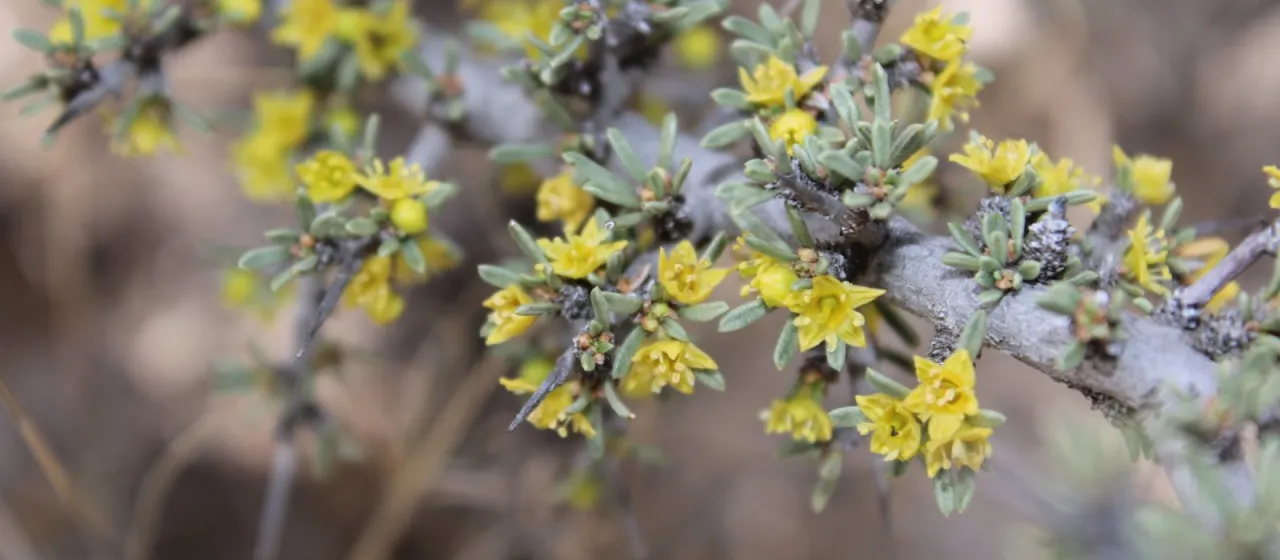
Description
Microrhamnus ericoides is a specialized shrub belonging to the Rhamnaceae family. It is recognized primarily for its remarkable resilience in extreme environments, making it a subject of interest for agricultural research focused on marginal land reclamation and drought-tolerant planting strategies.
The plant originates from the arid regions of North America, particularly the southwestern United States and Mexico. It is natively adapted to harsh conditions, including high solar radiation, low precipitation, and nutrient-poor, stony soils. This natural history defines its physiology, which is optimized for survival under persistent hydric stress.
Botanically, Microrhamnus ericoides is characterized by its ericoid (heather-like) foliage, which minimizes transpiration loss. The shrub typically exhibits a dense, woody, and thorny structure. This architecture is not only a defense mechanism but also a structural advantage for reducing soil wind erosion in open, arid landscapes.
Regarding cultivation requirements, the species thrives in well-drained, alkaline to neutral soils. In agricultural settings, it requires minimal intervention. Key maintenance principles include avoiding over-irrigation and ensuring the substrate allows for rapid water percolation, as the root system is highly sensitive to hypoxia caused by waterlogging.
The primary agricultural and environmental use of this culture is for soil stabilization and landscape restoration. It acts as an excellent barrier against erosion in degraded zones where conventional crops fail to establish. Its ability to thrive with almost no external input makes it a sustainable choice for long-term land management projects.
Common issues encountered in management:
- Root rot pathogens triggered by poor drainage.
- Infestations of leaf-feeding insects during drought stress periods.
- Sensitivity to sudden changes in microclimate humidity levels.