
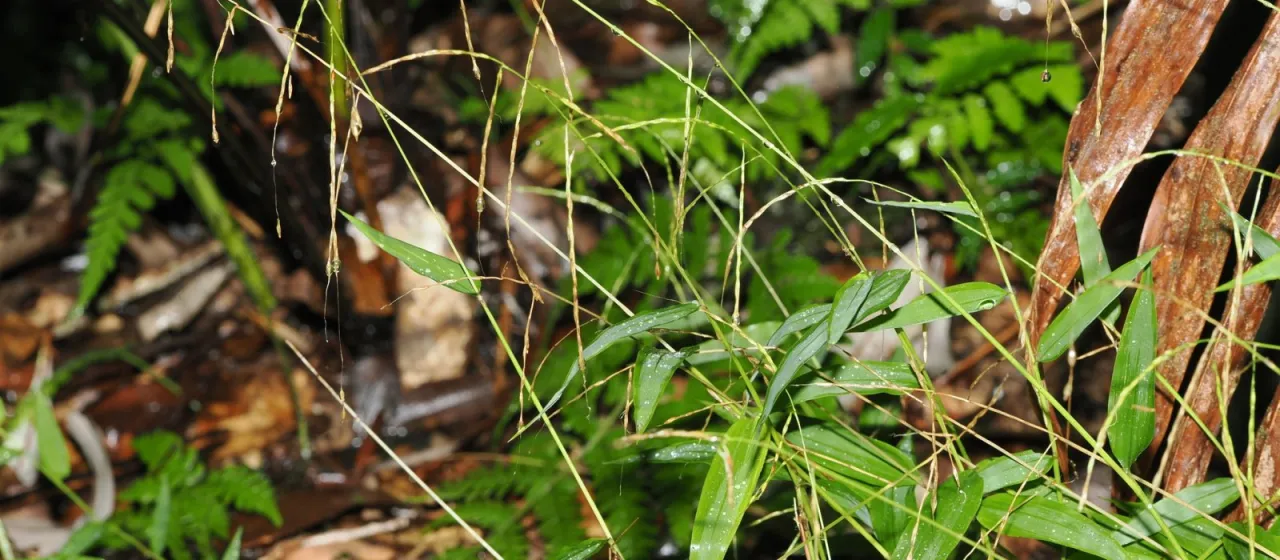
Description
Microstegium nudum is an annual grass species belonging to the Poaceae family. In an agricultural context, this plant is recognized for its adaptive capabilities in moist environments and its role in natural grassland ecosystems, often serving as a significant component of ground cover in specific climatic zones.
Originating from East and Southeast Asia, this species thrives in humid habitats such as riverbanks, forest edges, and low-lying meadow areas. Its geographical distribution is largely determined by its preference for environments where soil moisture remains consistent throughout the growing season.
Botanically, Microstegium nudum features slender, branched stems that can root at the nodes when in contact with moist soil. The leaves are linear-lanceolate, and the inflorescence consists of delicate racemes or panicles. This growth habit enables the plant to colonize areas effectively, forming a dense vegetative mat that is highly efficient at soil stabilization.
Agronomic requirements center on maintaining high soil moisture and avoiding direct competition from invasive weed species. The plant performs best in nutrient-rich, moist, and slightly acidic soils. Proper land management involves ensuring adequate drainage to prevent stagnation while maintaining enough water to support rapid biomass development during the peak growing season.
The primary economic use of this plant is related to forage production on marginal lands and its application in erosion control. Regarding plant health, it is occasionally susceptible to fungal pathogens like powdery mildew and rust under conditions of poor air circulation. Regular monitoring for common grass-feeding insects is advised to maintain crop vigor throughout the year.
- Requires consistent soil moisture.
- Effective for erosion control.
- Susceptible to typical grass rusts.
- Prefers shaded or semi-shaded humid environments.