
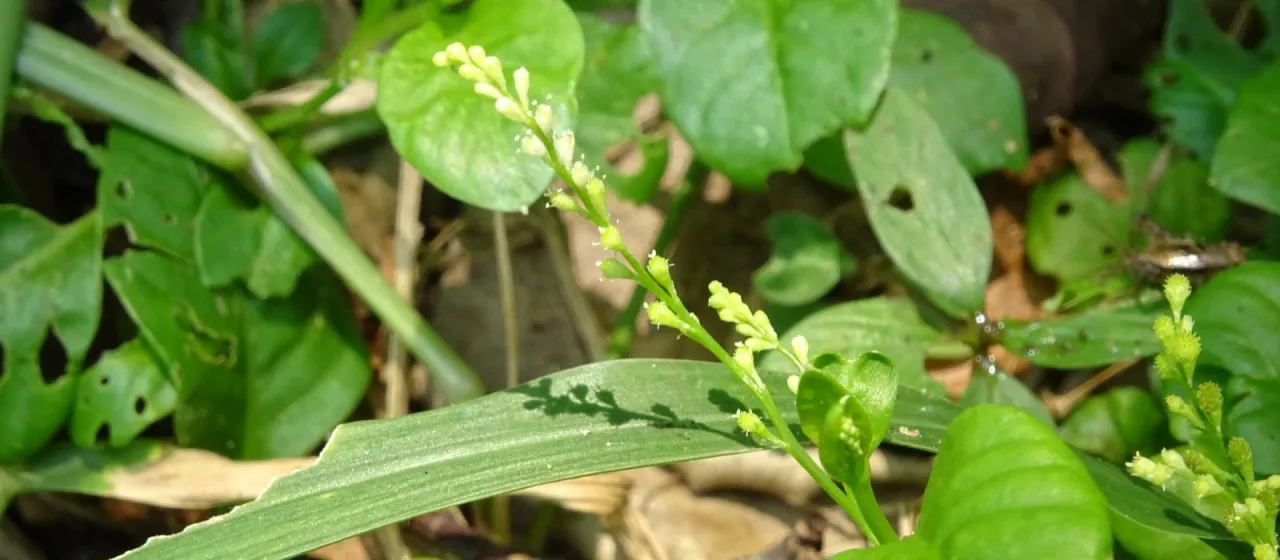
Description
Microtea debilis is an annual herbaceous plant belonging to the Phytolaccaceae family. It is recognized in botany for its distinct, delicate growth habit and its role within tropical ecosystems, where it functions as a typical colonizer of disturbed or moist, shaded ground.
The plant originates from the tropical regions of the Americas, with a range spanning from the Caribbean islands to various parts of South America. It thrives in humid tropical environments, often colonizing forest edges, abandoned farmland, and pathways where the soil remains consistently moist and organic-rich.
Botanically, Microtea debilis is characterized by its simple, alternate leaves and small, inconspicuous flowers arranged in racemes. The plant's structure is generally succulent or thin-stemmed, depending on the availability of light and moisture. Its root system is shallow, making it highly dependent on the top layer of soil for nutrient uptake.
Regarding cultivation, the species requires warm temperatures between 22°C and 28°C and does not tolerate frost. Soil should be well-drained yet moisture-retentive, mimicking the forest floor conditions. In an agricultural context, it is treated as a specialized niche crop rather than a widespread industrial plant, often cultivated for experimental or ethnobotanical research.
Host plant utilization is primarily linked to local folk medicine traditions. The plant is occasionally monitored for susceptibility to fungal infections, especially in humid conditions, and pests such as aphids or spider mites. Maintaining proper air circulation and balanced soil humidity is essential to ensure the health of the plant throughout its annual growth cycle.