
Description
Perfoliate pennycress (Microthlaspi perfoliatum) is an annual herb belonging to the Brassicaceae family. Within agricultural systems, it is classified as a weed that often interferes with winter cereal production, taking advantage of its early emergence pattern to compete for space, water, and essential nutrients in the early spring season.
The species originates from Europe, Western Asia, and North Africa. It has successfully adapted to a wide range of temperate climates, establishing itself in fields, pastures, and disturbed soil areas. Its ability to thrive in fallow lands often leads to its migration into adjacent cultivated fields, making it a persistent presence in many farming regions.
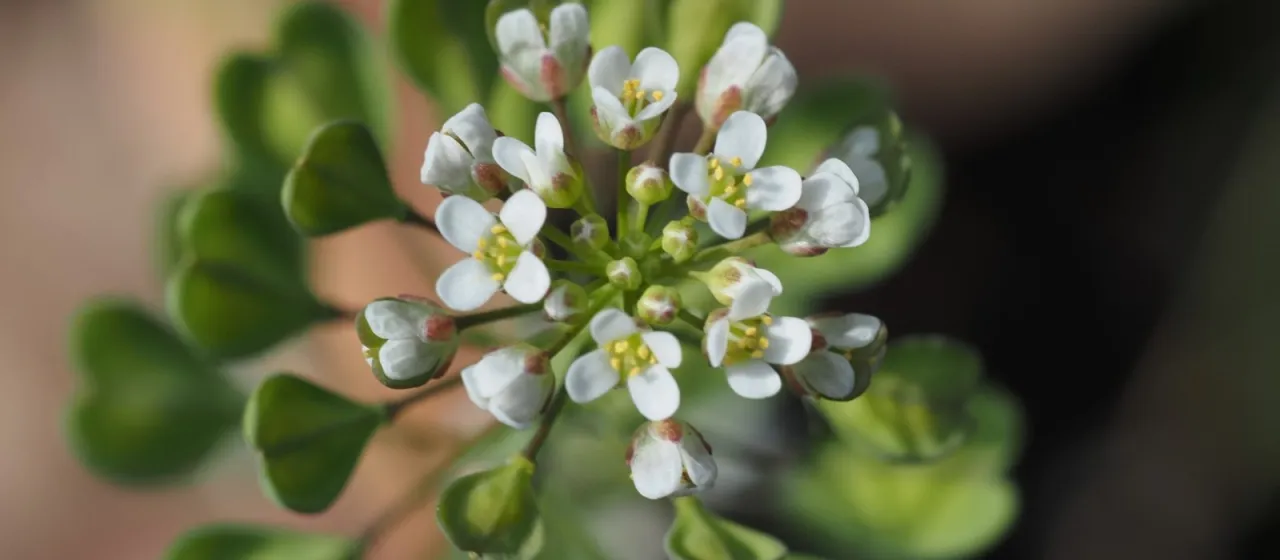
Botanically, the plant is characterized by a height of 5 to 20 cm with glaucous, hairless foliage. The leaves are distinctively perfoliate, meaning the stem appears to grow through the leaf blade base. It produces small, white, four-petaled flowers arranged in elongated racemes, followed by the development of flat, inversely triangular pods containing numerous small seeds.
From an agrotechnical perspective, successful management requires addressing its rapid life cycle. It prefers well-drained, lime-rich soils and can tolerate a variety of environmental stressors. Crop rotation involving competitive species and selective herbicide application remains the primary method for controlling infestations in commercial grain production.
The plant is typically viewed as a nuisance in agriculture rather than a useful crop. It serves as an alternative host for several pests and diseases common to the Brassicaceae family, such as flea beetles and downy mildew. Monitoring for these threats in the presence of Microthlaspi perfoliatum is essential for maintaining the overall health of nearby commercial crops.