
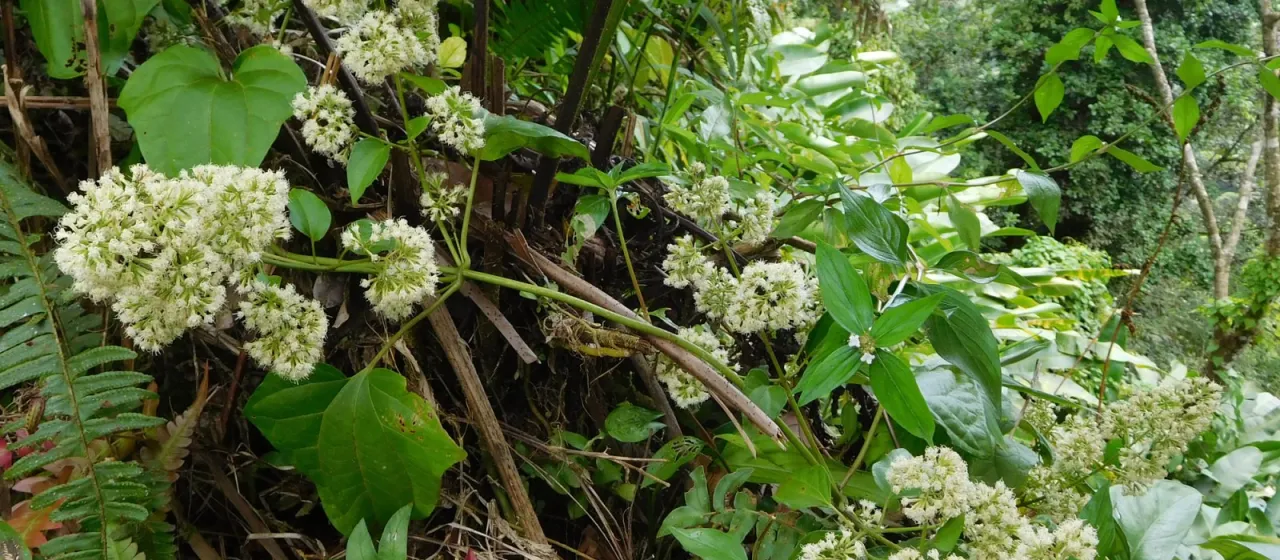
Description
Mikania vitifolia is a robust herbaceous vine or liana belonging to the Asteraceae family. Known for its distinctive foliage that resembles grape leaves, this species is a prominent member of the Mikania genus, which comprises numerous climbing plants native to the Americas.
The plant originates from the tropical regions of South America, thriving in the dense, humid forests of countries like Brazil and surrounding territories. In its natural habitat, Mikania vitifolia utilizes its climbing habit to navigate the canopy, seeking optimal light conditions while remaining rooted in the nutrient-rich, moist forest floor.
Botanically, the species is defined by its opposite, cordate-lobed leaves and compound inflorescences consisting of numerous small flower heads. As a fast-growing climber, it develops strong stems that can cover significant ground. The plant's reproductive success is facilitated by wind-dispersed seeds, typical for many members of the daisy family.
Cultivation requires conditions that mimic its native tropical environment. This means consistent warmth, high humidity, and protection from direct, harsh sunlight. The soil must be well-draining yet capable of retaining moisture, and the provision of sturdy structural supports, such as trellises or wires, is essential for its vertical development.
In terms of economic and practical use, Mikania vitifolia is studied for its potential chemical properties, often containing metabolites of interest to pharmaceutical research. While less common in commercial agriculture than other crops, it is valued in botanical collections and specialized greenhouse environments for its aesthetic and scientific properties.
- Requires consistent moisture levels in the substrate.
- Vulnerable to pests like aphids and whiteflies if stressed.
- Benefits from occasional pruning to maintain density.
- Best propagated via stem cuttings during the active growing season.