
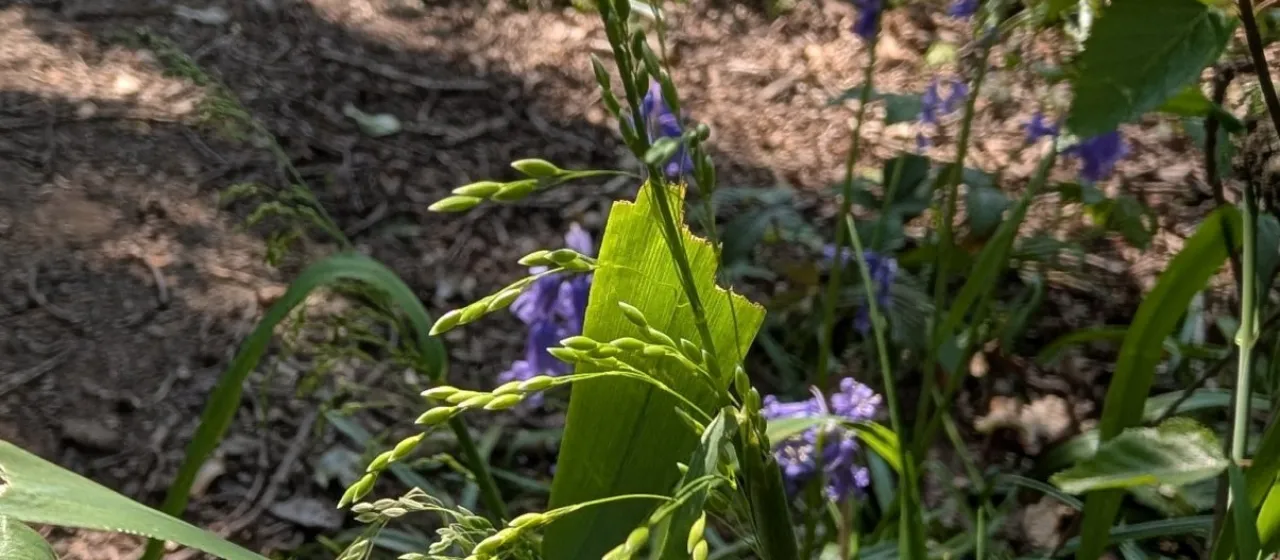
Description
Wood millet (Milium effusum) is a perennial grass species belonging to the family Poaceae. In agricultural and forestry settings, it is recognized as a valuable shade-tolerant forage plant, capable of thriving in woodland environments where typical pasture grasses fail to establish due to light limitations.
The plant is native to the temperate regions of Europe, Asia, and North America. Its natural habitat consists primarily of deciduous forests. In agricultural contexts, wood millet is managed as a supplemental forage crop in silvopastoral systems or conserved in woodland edges to provide high-quality grazing material for livestock during the growing season.
Botanically, this grass grows in loose tufts with erect, smooth stems reaching heights of 100 to 150 cm. The leaves are broad, flat, and soft, with a distinct bright green hue. Its inflorescence is a large, spreading, and delicate panicle, which gives the plant its elegant appearance. The root system is fibrous and effective at stabilizing soils in shaded, damp woodland areas.
Cultivation requirements for wood millet focus on soil fertility and moisture management. The plant prefers moist, nutrient-rich, and well-drained loamy soils. It is sensitive to prolonged drought and intense direct sunlight, which can cause leaf scorch and reduced biomass production. Proper management involves avoiding heavy grazing pressures that can damage the delicate root system.
The primary agricultural use is forage production. Wood millet is highly palatable to livestock, particularly during its early growth phases, making it an excellent component for forest-based grazing. Beyond agriculture, it is frequently utilized in ornamental landscaping and forest restoration projects due to its graceful, airy appearance and ability to provide ground cover in shaded landscape zones.
Common issues encountered during cultivation include:
- Rust infections occurring during periods of high humidity.
- Infestations by stem-boring insects during dry seasons.
- Competition from aggressive forest understory weeds.
- Loss of productivity due to soil compaction or excessive trampling.