
Description
Millettia grandis, commonly known as the Umzimbeet or Kaffir ironwood, is a significant species within the Fabaceae family. This evergreen tree is highly regarded for its structural beauty and ecological value. It represents a robust woody perennial that serves as a vital component in the biodiversity of its native ecosystems.
Originating from the coastal forests of South Africa, particularly the Eastern Cape and KwaZulu-Natal regions, this species is well-adapted to warm, humid environments. It thrives in frost-free zones, making it an excellent candidate for ornamental landscaping in subtropical climates around the world. The tree is often found in sheltered valleys and coastal thickets where humidity levels remain consistent throughout the year.
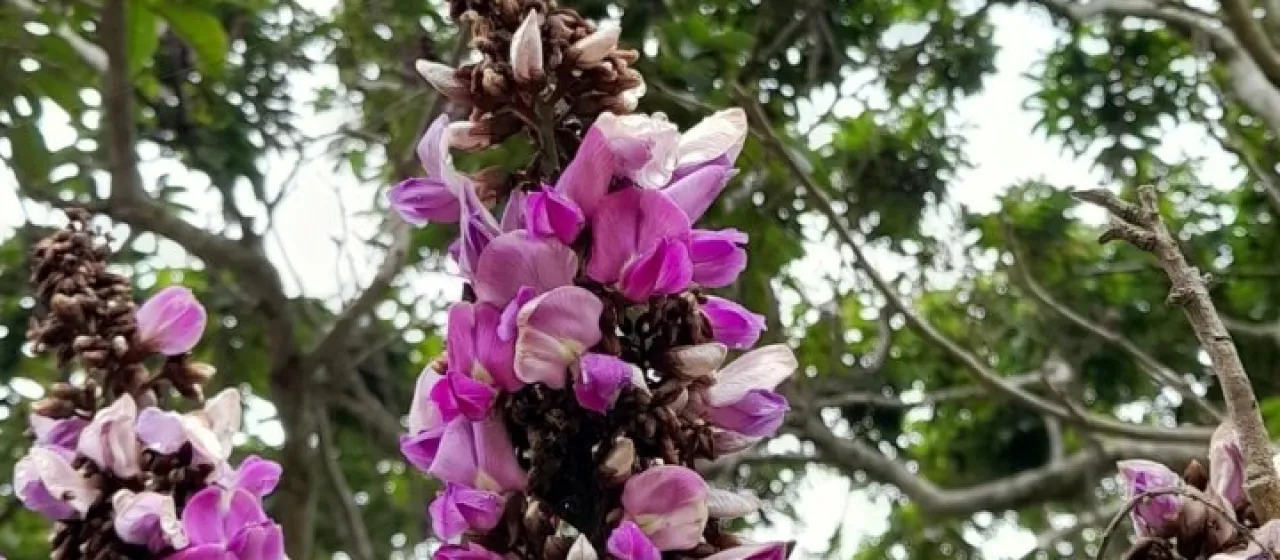
Botanically, the tree is characterized by its large, glossy pinnate leaves and a dense, spreading canopy. The flowering display is arguably its most striking feature, consisting of long, pendulous racemes of violet to purple flowers that attract various pollinators. The tree produces woody, dehiscent pods containing flattened, disc-shaped seeds that are typically dispersed by explosive mechanisms upon maturity.
Agricultural and horticultural success depends on providing rich, well-draining soil and a sunny exposure. While the tree prefers consistent moisture, it is surprisingly drought-tolerant once established. Propagation is usually achieved through seeds, which should be sown fresh. Proper spacing is essential, as the tree can grow quite large, requiring ample room for root expansion and crown development.
In terms of хозяйственного use, Millettia grandis is valued for its exceptionally hard and durable wood, historically used for crafting tools and fine furniture. In landscape design, it serves as a stunning specimen tree for large gardens and parks. It is also an nitrogen-fixing plant, which naturally improves soil fertility, making it a sustainable choice for mixed-species forest plantations.
- Spectacular purple floral racemes.
- High-density, durable timber quality.
- Natural nitrogen-fixing properties.
- Adaptability to coastal environments.