
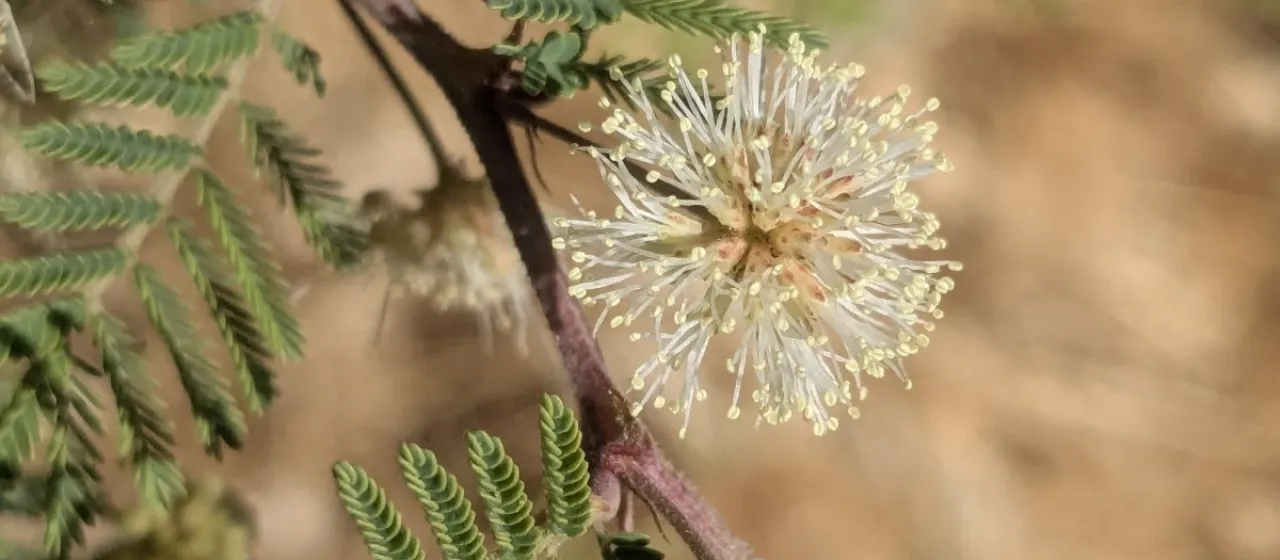
Description
Mimosa aculeaticarpa is a perennial spiny shrub belonging to the legume family (Fabaceae). This species is well-adapted to semi-arid environments, demonstrating high resilience to extreme temperatures and moisture scarcity. In agricultural contexts, it is valued for its hardiness and ability to thrive in challenging soil conditions where other crops may fail.
The native range of this plant extends primarily through Mexico and the southwestern United States. It naturally occurs in shrublands and grasslands where it acts as a stabilizing element of the local vegetation. Its ability to tolerate low-nutrient soils makes it an ideal candidate for ecological restoration projects in arid and semi-arid zones.
Botanically, Mimosa aculeaticarpa features distinct thorns along its stems, which serve as an effective defense against herbivores. Its foliage is composed of bipinnate leaves, and it produces soft, globe-shaped inflorescences. These flowers are highly attractive to pollinators, making the plant a notable contributor to local biodiversity and apiary health.
From an agrotechnical perspective, the plant requires well-drained, sandy, or rocky soils. It is highly drought-tolerant once established but needs careful monitoring during the seedling stage. The species does not tolerate waterlogging, which can lead to root diseases. Regular maintenance involves pruning to manage its spreading growth habit and ensure it does not encroach on surrounding farmland.
The primary agricultural and economic uses include:
- Acting as a natural windbreak to reduce soil erosion in exposed agricultural fields.
- Providing significant nectar resources to support regional honey production.
- Enhancing soil fertility by fixing atmospheric nitrogen through root nodule symbioses.
- Supplying biomass for traditional fuel or artisanal woodworking purposes in local communities.