
Description
Catclaw mimosa (Mimosa biuncifera) is a perennial shrub belonging to the Fabaceae family. Known for its remarkable resilience in semi-arid environments, this plant serves as a vital component in rangeland management, particularly in regions prone to soil degradation and desertification.
The plant originates from the arid regions of the Southwestern United States and Northern Mexico. It typically thrives in diverse habitats including rocky slopes, canyons, and desert scrublands. Its range of cultivation is largely defined by its high tolerance for heat and periodic drought, making it a staple species in xeriscape restoration projects.
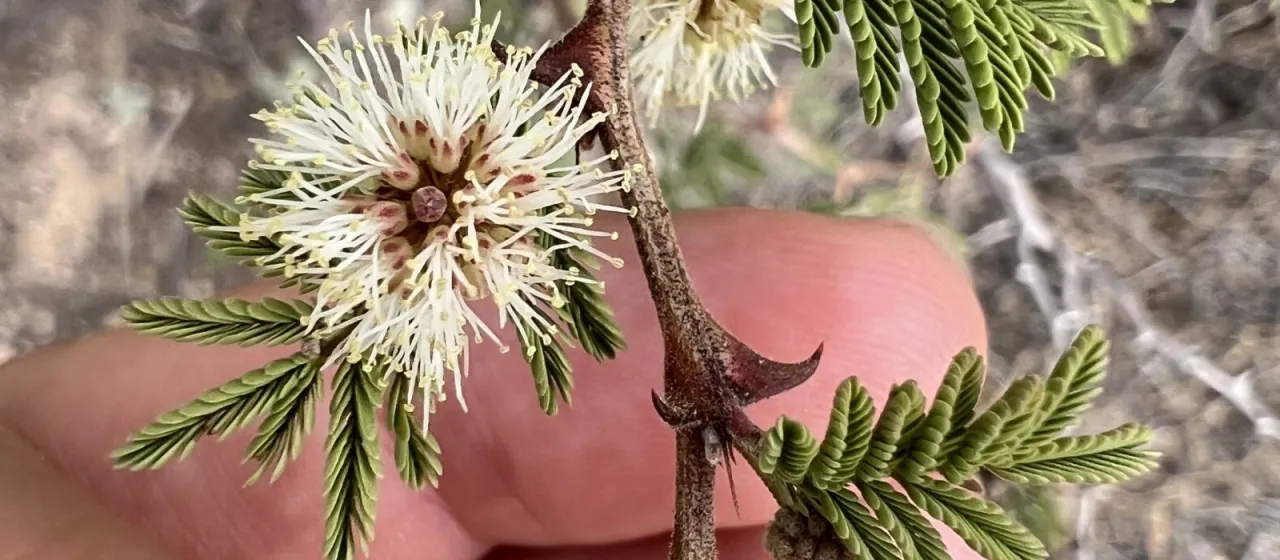
Botanically, it is defined by its characteristic paired, recurved spines that resemble a cat's claw, which serves as a defensive mechanism against herbivores. The foliage consists of delicate, bipinnate leaves. During the blooming season, the shrub produces dense, globular inflorescences ranging from white to pale pink, which are highly attractive to local pollinators, including wild bees and butterflies.
Regarding agro-technical requirements, the crop demands well-draining soils, preferably sandy or rocky, with good aeration. It is well-adapted to alkaline soil conditions and requires full sun exposure for optimal growth. Minimal intervention is required for established plants, although weed control during the seedling stage is crucial for ensuring successful stand establishment.
The main agricultural applications for Catclaw mimosa include:
- Forage: It provides browse for livestock, particularly goats and cattle in semi-arid rangelands.
- Soil conservation: Its root system helps in anchoring loose soil, effectively reducing wind and water erosion.
- Apiculture: It acts as an important late-season nectar source for honeybees.
Typical plant health issues involve infestation by specialized leaf-feeding insects and spider mites under high-heat stress. Fungal pathogens are rare but can occur if the plant is subjected to poor soil drainage or excessive stagnant moisture, leading to crown rot.