
Description
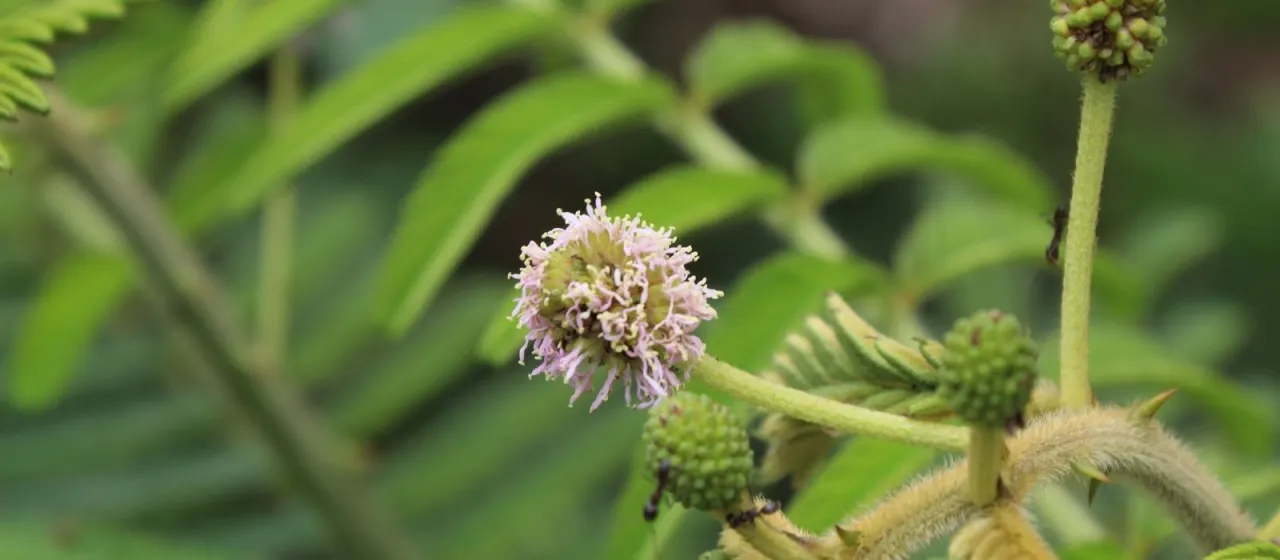
Mimosa pellita is a perennial shrub belonging to the Fabaceae family. Known for its vigorous growth, this plant typically thrives in humid environments, often occupying wet, marshy areas or riverbanks where it forms dense, thicket-like populations that provide significant environmental coverage.
The origin of Mimosa pellita is traced back to the tropical regions of Central and South America. In its natural range, the plant is highly adapted to tropical climates with distinct wet seasons. It has been successfully introduced or observed in various tropical areas worldwide where specific hydrological conditions provide the necessary moisture for its rapid development.
Botanically, this species is characterized by its pinnate leaves and distinctive spherical flower heads. The plant possesses a robust root system capable of forming symbiotic relationships with nitrogen-fixing bacteria. This biological interaction is crucial for soil nitrogen enrichment, making the plant an efficient biological fertilizer in specific agricultural and reclamation contexts.
The agronomy of Mimosa pellita requires careful site selection, prioritizing areas with high soil moisture content. The plant is relatively low-maintenance in terms of chemical fertilization but requires systematic monitoring to prevent it from becoming overly invasive. Pruning and spatial management are essential to maintain the crop within designated boundaries on the farm.
- High biomass production for green manure.
- Biological nitrogen fixation.
- Soil erosion control on wet sites.
- Use in riparian buffer zones.
Economically, Mimosa pellita is primarily used for phytoremediation and land rehabilitation projects. While it provides excellent coverage for degraded land, producers must remain vigilant against potential pests such as leaf-eating insects. Fungal infections can also occur in environments with poor drainage, necessitating proper water management strategies to maintain plant health.