
Description
Sensitive briar (scientific name: Mimosa quadrivalvis) is a perennial leguminous plant belonging to the Fabaceae family. This species is widely recognized for its sprawling growth habit, prickly stems, and highly responsive foliage that folds upon touch. It serves as a significant botanical subject due to its ecological role and physiological adaptions to various environments.
The plant is native to the Americas, ranging from temperate to tropical zones. In an agricultural context, it is studied for its ability to fix atmospheric nitrogen, which enhances soil fertility. This makes it a valuable candidate for soil conservation projects, particularly in restoring degraded landscapes or managing pasture lands where nitrogen deficiency is a concern.
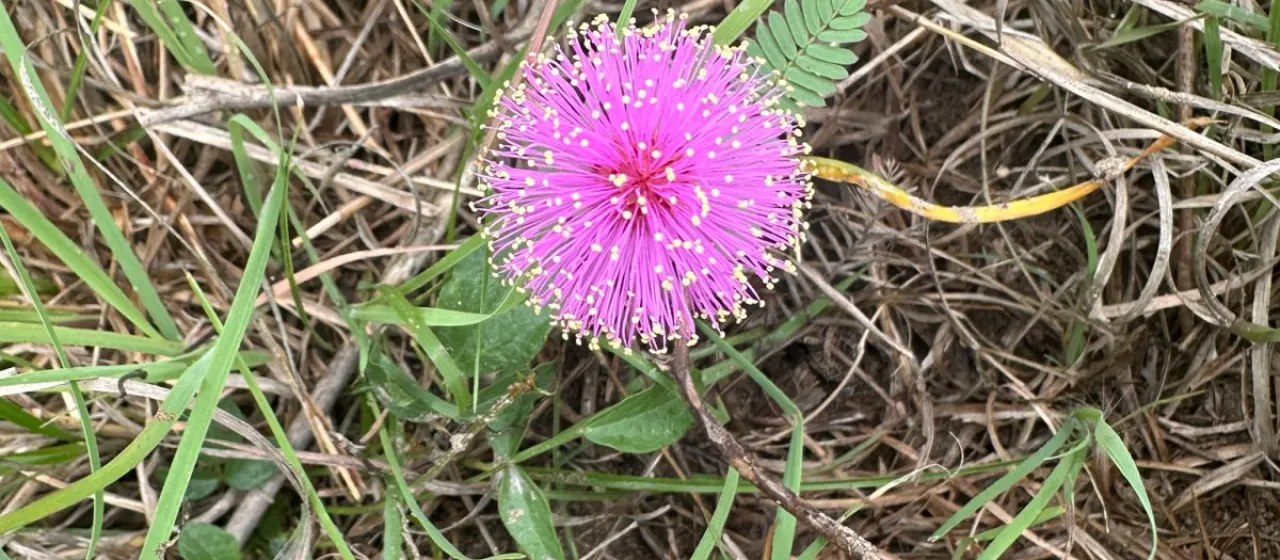
Botanically, Mimosa quadrivalvis features compound leaves and dense flower clusters, often displaying pink or lavender hues. The root system is deep and robust, allowing the plant to thrive in challenging soil conditions. The fruit is a characteristic legume pod that segments as it matures, aiding in seed dispersal and the natural colonization of new areas.
Successful cultivation requires specific environmental conditions, including well-drained, porous soils and ample sunlight. While the plant is drought-tolerant once established, irrigation may be necessary during the initial growth stages. Agronomic management involves site selection to optimize soil structure and preventing the plant from becoming overly invasive in nearby cultivated fields.
The plant is utilized for both forage potential and land management purposes, such as erosion control on sloped terrains. Common issues include infestation by spider mites and susceptibility to root rot if the soil remains waterlogged. Producers are advised to employ standard integrated pest management strategies to ensure healthy development and sustained growth of the crop.