
Description
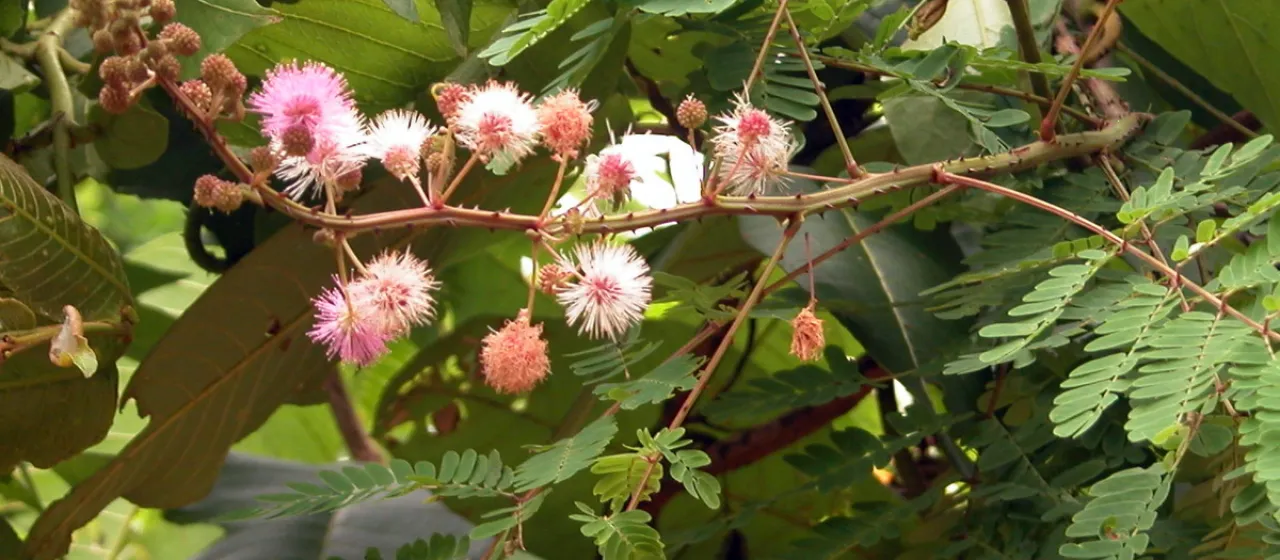
Mimosa rubicaulis is a perennial, woody shrub belonging to the Fabaceae family. Recognized for its distinctive thorny stems and feather-like foliage, this plant serves as a significant biological component in tropical and subtropical landscapes. It is scientifically distinguished by its resilience and adaptation to challenging environmental conditions.
The native distribution of this species covers parts of South Asia, particularly the foothills of the Himalayas and various regions of India. It typically thrives in forest fringes, clearings, and riparian zones. Due to its hardiness, it has been introduced to various regions where environmental restoration and soil stabilization are prioritized.
Botanically, the plant features bipinnate leaves and small, globular flower heads that range from pink to white. The stems are armed with recurved prickles, which provide physical defense against herbivores. Its root system is particularly notable for being deep and capable of nitrogen fixation, which significantly benefits the local soil nutrient profile.
Cultivation requirements involve ensuring full sun exposure and well-drained soil types, such as sandy loams. The plant is drought-tolerant once established but requires consistent moisture during its initial growth phase. Agricultural maintenance focuses on controlled pruning and management to prevent the plant from becoming invasive, as it is known for rapid colonization.
In terms of хозяйственного (agricultural) utilization, Mimosa rubicaulis is highly valued for erosion control on hilly terrains and for the creation of impenetrable living fences. Its nitrogen-fixing capabilities make it a useful component in agroforestry systems. Additionally, the plant is researched for its phytochemical properties and its role in sustainable land management.
The health of this crop can be influenced by several biotic and abiotic factors:
- Root rot due to poor soil drainage.
- Infestations of aphids and mites during hot, dry periods.
- Powdery mildew when air circulation is insufficient.
- Susceptibility to weed encroachment in the early planting stages.