
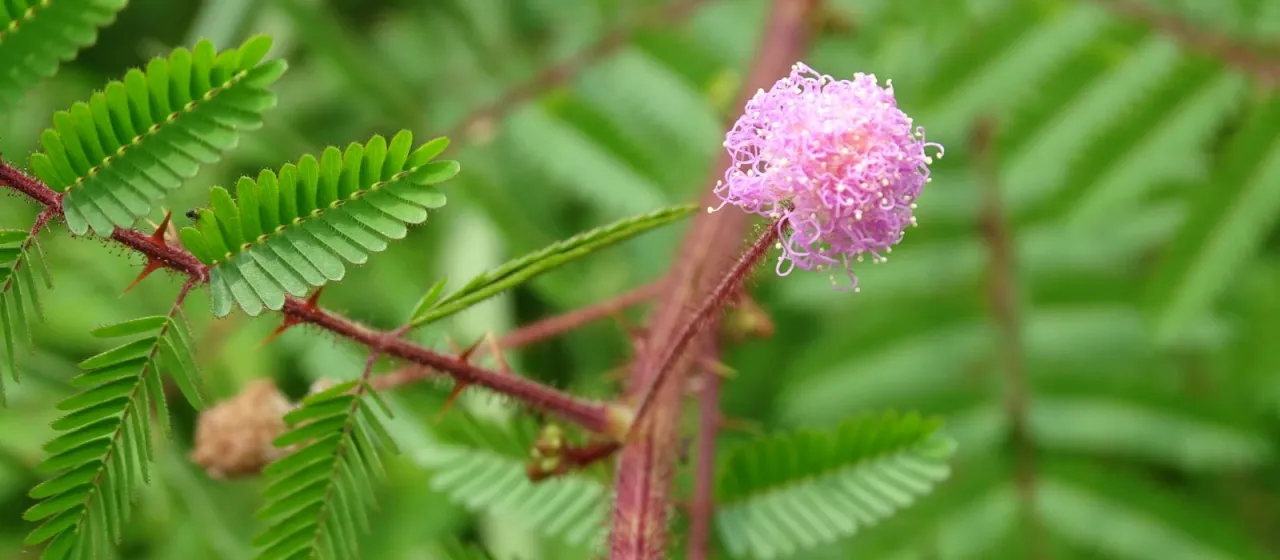
Description
Mimosa somnians is a perennial herb belonging to the Fabaceae (legume) family. This species is recognized for its ecological utility and biological properties, often studied in the context of tropical agroforestry and soil management, where its integration can significantly contribute to sustainable land use.
Originating from the tropical regions of South and Central America, the plant is well-adapted to warm climates. It is typically found in savanna-like ecosystems and secondary forests, thriving in environments that provide consistent temperatures throughout the year. Its distribution is primarily limited to tropical zones due to its high sensitivity to frost and cold stress.
Botanically, the species is known for its pinnate leaves that exhibit sensitive movement when touched. The root system is biologically significant, as it forms symbiotic relationships with nitrogen-fixing bacteria, which allow the plant to thrive in nutrient-poor soils. The plant architecture varies, often presenting as a sprawling shrub that can effectively cover the ground surface.
Agricultural requirements focus on well-draining soil and ample sunlight. It is not suitable for waterlogged areas, as stagnant water can cause root rot. Proper land preparation involves ensuring adequate soil aeration, and in agricultural settings, weed control during the seedling stage is essential to allow the plant to establish itself without competition for resources.
- Enhancement of soil fertility through biological nitrogen fixation.
- Prevention of soil erosion in tropical climates.
- Utilization as a cover crop to improve soil structure.
- Potential role as an organic soil conditioner.
Typical pests and diseases include common tropical insects such as aphids and mites, as well as fungal infections favored by high humidity. Effective management involves regular scouting and maintaining optimal density to ensure good airflow within the canopy. By adhering to these practices, growers can maximize the benefits of this unique legume in agricultural systems.