Minthostachys mollis
Minthostachys mollis Griseb.
Description
Minthostachys mollis, popularly referred to as Muña, is a perennial subshrub belonging to the Lamiaceae family. Native to the Andean highlands of South America, this plant is an essential resource for local communities, valued for its potent aromatic properties and significant medicinal applications that have been documented for centuries.
The native range of this species extends across the high-altitude regions of Peru, Bolivia, Ecuador, and Argentina, typically found at elevations between 2,500 and 3,500 meters. The plant thrives in cool, high-UV mountain climates with well-distributed rainfall, showcasing high resilience to the extreme environmental stressors characteristic of the Andes.
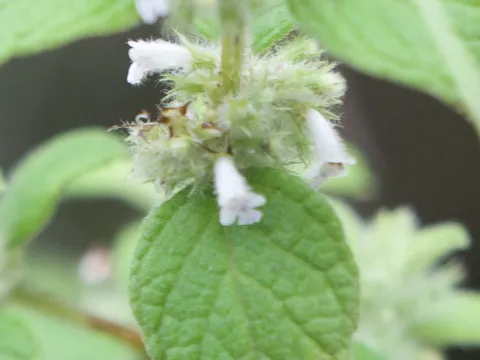
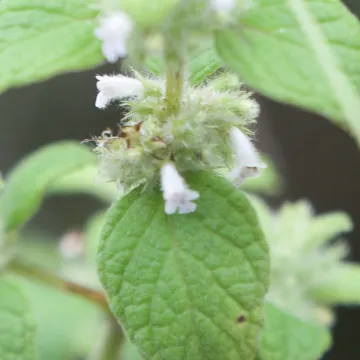
Botanically, the plant grows as a dense, woody-based herb or shrub, reaching heights of up to 1.2 meters. Its leaves are small, serrated, and covered with fine hairs, which house the glandular trichomes responsible for producing essential oils. These oils contain a rich profile of secondary metabolites, primarily pulegone, menthone, and limonene, which give it a distinctively strong minty fragrance.
Regarding cultivation requirements, Minthostachys mollis prefers loose, well-draining soils with a neutral or slightly acidic pH. It is highly susceptible to root rot, necessitating precise irrigation management to prevent waterlogged conditions. The plant performs best in full sun and requires periodic pruning to maintain bushiness and encourage the production of fresh, volatile-rich foliage.
The agricultural and economic significance of this crop is multifaceted. Beyond its traditional role in herbal medicine to treat digestive disorders and respiratory ailments, it is widely used as a culinary herb and a raw material for the extraction of essential oils. Recent studies also highlight its potential in agroecology as a natural repellent against post-harvest pests, offering a sustainable alternative to synthetic pesticides.
- High antioxidant content in essential oils.
- Traditional use in treating digestive and respiratory conditions.
- Excellent potential for organic pesticide development.
- Thrives in high-altitude conditions with minimal intervention.
Photo gallery