
Description
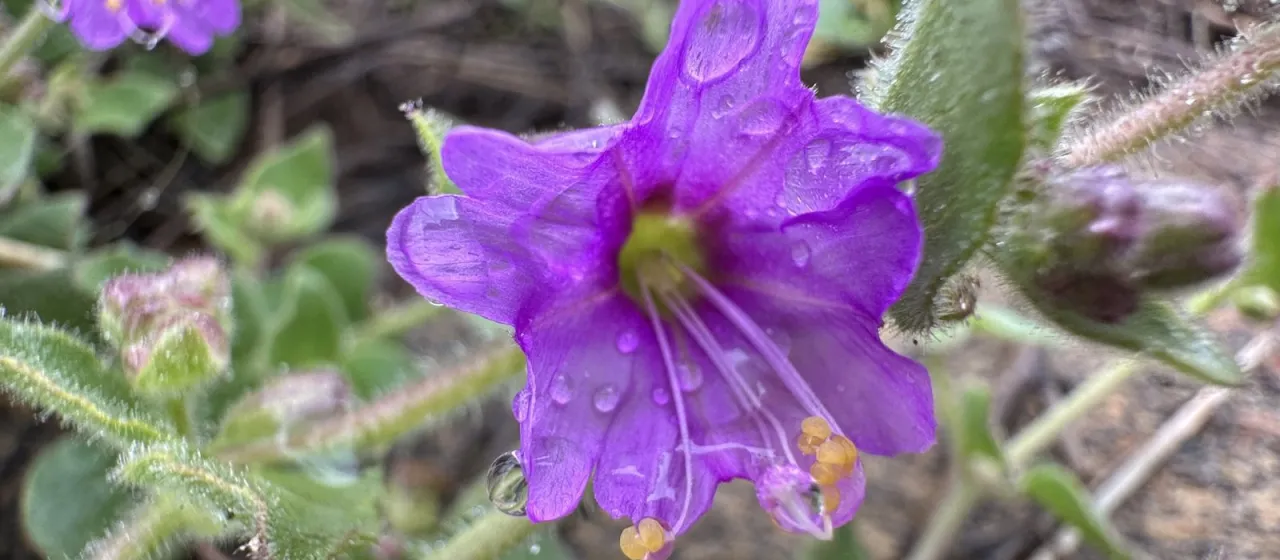
California four o'clock (Mirabilis laevis) is a perennial herbaceous plant within the Nyctaginaceae family. Known for its remarkable resilience, this species is highly valued in horticulture for its ability to thrive in harsh environments, making it an excellent candidate for water-wise landscaping and sustainable garden design in Mediterranean-style climates.
The native distribution of this plant is primarily found in the southwestern United States, particularly across California. It naturally inhabits dry, rocky slopes, chaparral, and coastal scrub communities. This evolutionary history has equipped the plant with specialized survival strategies that allow it to persist through seasonal droughts that would cause many other species to perish.
Botanically, Mirabilis laevis is distinguished by its thickened, tuberous roots and sprawling growth habit. The leaves are typically ovate to lanceolate, with a smooth texture that gives the plant its scientific name. The flowers are funnel-shaped, displaying vibrant hues ranging from light pink to deep magenta, providing a significant aesthetic appeal when planted in clusters.
Regarding agrotechnical requirements, the plant demands well-draining soils with a neutral or slightly alkaline reaction. It does not tolerate waterlogged conditions, which can lead to rapid root decay. Full sun exposure is essential for maintaining a compact growth habit and ensuring prolific blooming; however, in regions with extreme summer heat, light afternoon shade can help protect the foliage from scorching.
The primary horticultural and agricultural applications for California four o'clock include:
- Integration into xeriscape designs to reduce irrigation demand.
- Erosion control on sloped terrains due to its extensive root systems.
- Pollinator support, as its flowers are attractive to a variety of native bees and butterflies.
In terms of plant health, Mirabilis laevis is relatively robust, but it can be susceptible to aphids and spider mites during periods of drought stress. Fungal infections, such as root rot or powdery mildew, are almost exclusively related to poor drainage or excessive humidity. Maintaining clean cultivation areas, avoiding overhead watering, and providing sufficient spacing between individual plants are the best methods to manage these risks effectively.