
Description
Colorado four o'clock (lat. Mirabilis multiflora) is a distinctive perennial herbaceous plant belonging to the Nyctaginaceae family. Characterized by its massive, woody root system, this species is exceptionally well-adapted to surviving prolonged drought, storing energy and moisture to maintain growth in arid climates where other ornamental plants would struggle.
The native range of this plant encompasses the southwestern United States and parts of northern Mexico. Typically found in rocky, open habitats, rocky outcrops, and high desert shrublands, it thrives in environments characterized by poor soil quality and wide temperature fluctuations. Its natural resilience has made it a model candidate for xeriscaping in modern landscape architecture.
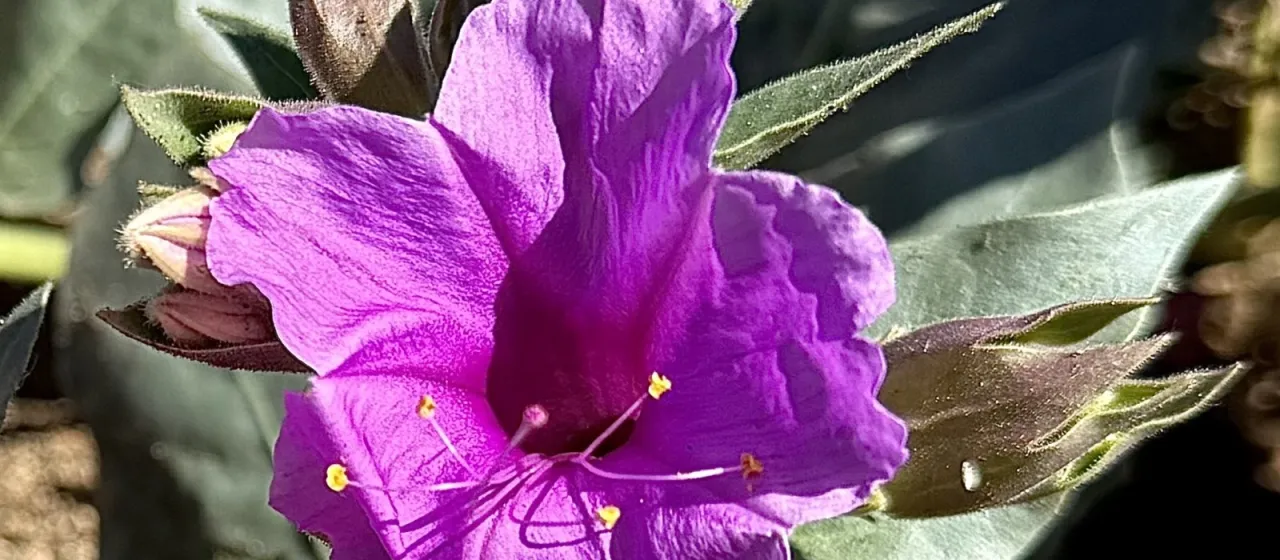
Botanically, the plant develops into a sprawling, bushy mound. Its foliage consists of broad, heart-shaped leaves with a dark green hue. The flowers are the most striking feature: large, trumpet-shaped, and vivid magenta-purple, appearing in profusion. These blooms are unique in their opening schedule, typically unfurling in the late afternoon and remaining open through the night.
Cultivation requires full sun exposure and soil with excellent drainage. While it is tolerant of nutrient-poor soils, it is highly sensitive to root rot caused by wet winter conditions or heavy, clay-based substrates. In an agricultural or garden setting, irrigation should be carefully managed, providing water only during the establishment phase and periods of extreme drought.
- Exceptional drought resistance once established.
- Sensitivity to poor soil drainage and winter moisture.
- Excellent performance in rock gardens and embankments.
- Low requirement for commercial fertilizers.
The primary utility of this plant is ornamental, particularly in xeriscapes and dry-climate landscaping. Beyond its aesthetic value, the plant is valued for its ability to stabilize loose, rocky slopes, preventing soil erosion. As a night-blooming species, it provides critical ecological services by attracting specialized nocturnal pollinators, including hawk moths, to the garden ecosystem.