
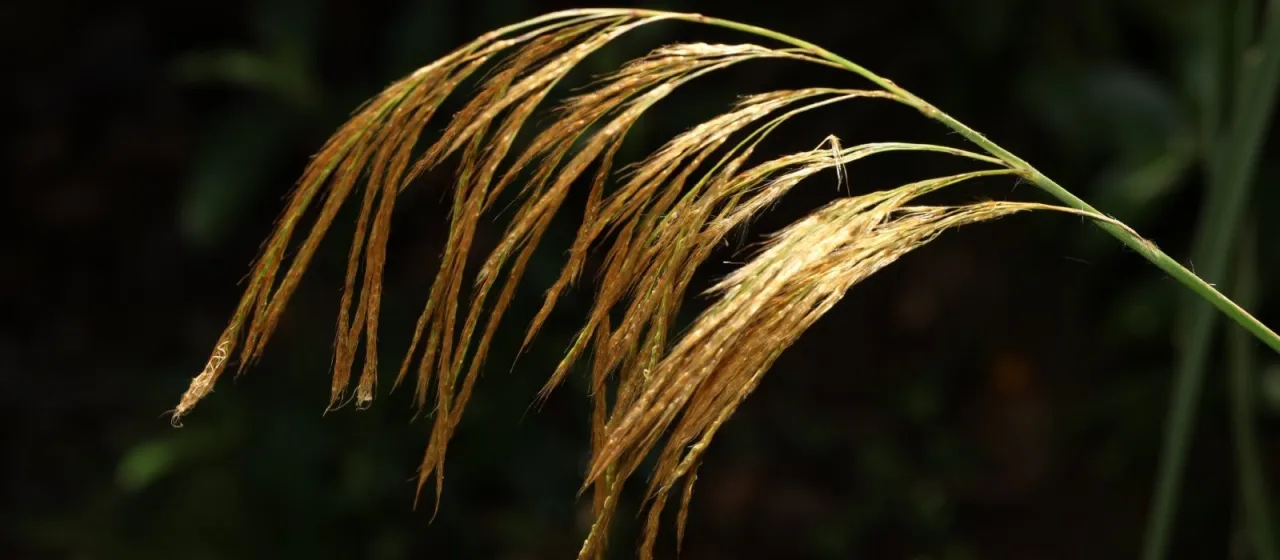
Description
Himalayan fairy grass (Miscanthus nepalensis) is a perennial herbaceous plant belonging to the Poaceae family. This ornamental grass is highly regarded for its delicate, pendulous, golden-bronze inflorescences that appear in late summer. It forms elegant, upright clumps that provide structural interest throughout the growing season and add movement to garden landscapes.
The species originates from the high-altitude regions of the Himalayas, specifically Nepal and the surrounding mountainous areas. This natural environment has shaped its growth habits, favoring temperate climates with adequate rainfall. Unlike some other Miscanthus species, it is known for its distinct, graceful appearance and smaller, more refined stature compared to giant varieties.
Botanically, it features slender, arching green leaves and sturdy stems that support the drooping, silk-like flower plumes. The plant is a rhizomatous perennial, ensuring its longevity in garden beds. As the season progresses, the foliage often develops autumnal hues, which, combined with the persistent seed heads, provides interest well into the cooler months.
Cultivation requirements involve planting in well-draining, moderately fertile soil with consistent moisture. While it enjoys a sunny position, it can tolerate partial shade in hotter climates. Agronomic care is relatively straightforward and consists of spring fertilization to promote growth and annual pruning of dead foliage before the new shoots emerge, which helps maintain the plant's health and vigor.
The primary uses for Miscanthus nepalensis include:
- Landscape design in naturalistic or meadow-style plantings.
- Adding vertical texture to mixed perennial borders.
- Soil stabilization on moderate slopes due to the dense root network.
- Usage of plumes in dried floral arrangements and home decor.
Regarding plant health, Himalayan fairy grass is generally robust. It is not prone to severe infestations, though aphids or mites may occur under unfavorable environmental conditions. To prevent potential issues such as fungal leaf spot or root rot, it is essential to avoid poorly drained soils and ensure adequate air circulation around the plants, preventing excessive humidity buildup within the clump.