
Description
Carolina bristlemallow (Modiola caroliniana) is a perennial herbaceous plant belonging to the Malvaceae family. Known for its prostrate or creeping growth habit, it is a distinctive species within its family. The stems typically spread along the ground, rooting at the nodes, which facilitates rapid expansion across open areas and disturbed habitats.
The plant is native to the Americas, ranging across tropical and subtropical regions. It has successfully naturalized in numerous parts of the world, including parts of Europe, Australia, and Africa. Its ability to thrive in diverse environments, from pastures and orchards to roadsides and urban waste areas, has established it as a highly adaptable opportunistic species.
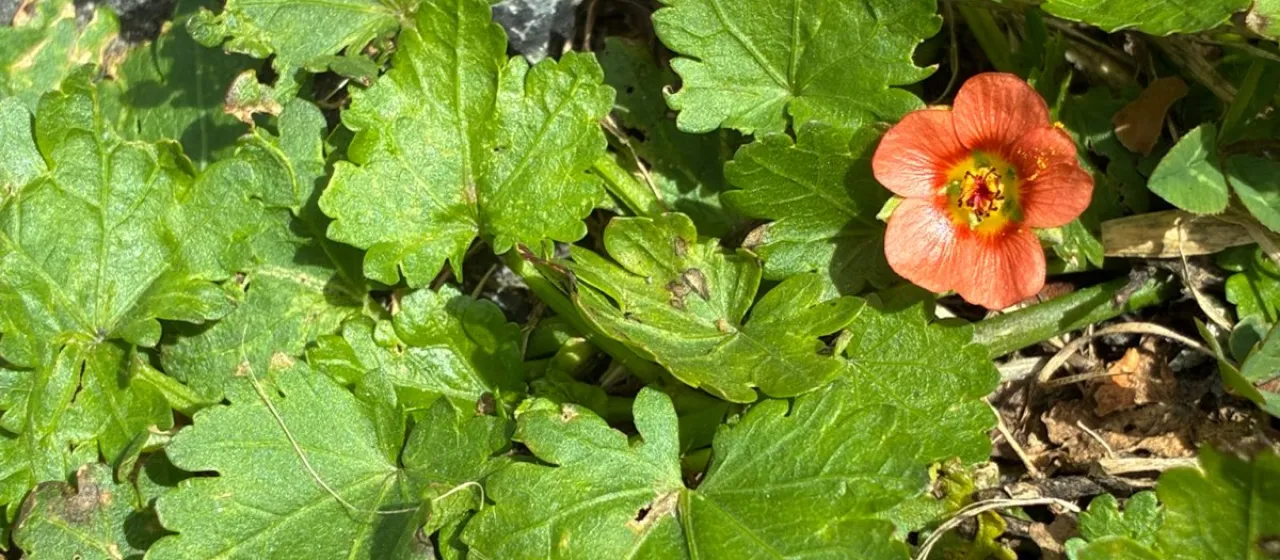
Botanically, the species is identified by its palmately-lobed leaves with serrated margins. The flowers are relatively small, typically featuring orange to reddish petals that bloom throughout the warmer months. The fruit is a distinctive schizocarp that breaks into segments at maturity, a key feature that aids in the mechanical dispersal of seeds within the soil profile.
In terms of agricultural requirements, the species favors moist, fertile soils and prefers open, sunny locations. It does not possess significant cold hardiness and is often restricted to temperate and warmer climates. Management of this plant in an agricultural context requires consistent intervention; due to its creeping nodes, simple mowing or shallow cultivation is often insufficient to fully eliminate established stands.
- Requires consistent soil moisture to thrive.
- Can be invasive in cultivated row crops.
- Used occasionally as ground cover in specific horticultural settings.
- Susceptible to typical mallow-family pests like aphids and spider mites.
Economically, the plant is rarely cultivated intentionally; instead, it is primarily managed as a weed. While it can contribute to ground cover and erosion control in non-cropped areas, its presence in commercial fields often interferes with crop development. It is susceptible to various fungal pathogens, particularly in high-humidity conditions, which can lead to leaf spots and reduced vigor.