
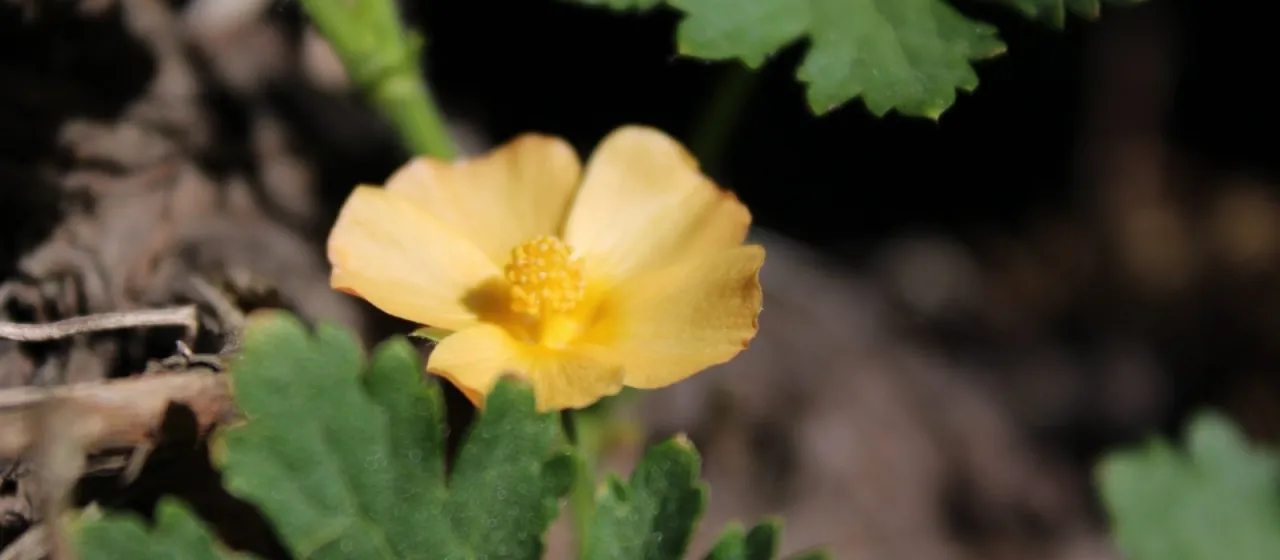
Description
Modiolastrum malvifolium is a perennial herbaceous plant belonging to the Malvaceae family. It is recognized for its prostrate growth habit and is often studied for its role in grassland ecosystems. The plant is botanically distinct due to its trailing stems that are capable of rooting at nodes, which allows it to spread effectively across open ground.
Originating from South America, specifically regions in Argentina, Uruguay, and Brazil, this plant is well-adapted to temperate and subtropical grasslands. It thrives in open field environments where sunlight is abundant. Historically, it has been a component of natural pastures, providing essential biodiversity and ground cover in these regions.
From a botanical standpoint, the leaves are palmately lobed, resembling those of other mallow species, which gives the plant its name. The flowers are typically small and delicate, appearing in shades of pink to light purple. The root system is relatively shallow, which makes it particularly responsive to moisture levels in the upper soil layers, emphasizing the need for consistent irrigation in drier climates.
In terms of agricultural requirements, Modiolastrum malvifolium prefers well-drained, fertile soil with a neutral pH. It is sensitive to waterlogging, so proper drainage is crucial for plant health. Farmers and agronomists suggest that it performs best when integrated into mixed pasture systems rather than as a monoculture, as this helps maintain soil stability and enhances the overall nutritional profile of the forage.
The primary economic use for this species includes forage production and soil erosion control. While not widely cultivated as a primary crop globally, it remains an important resource for local livestock grazing. Common pests include spider mites and various leaf-feeding insects, while fungal diseases can become an issue if humidity remains high for prolonged periods without adequate air circulation.