
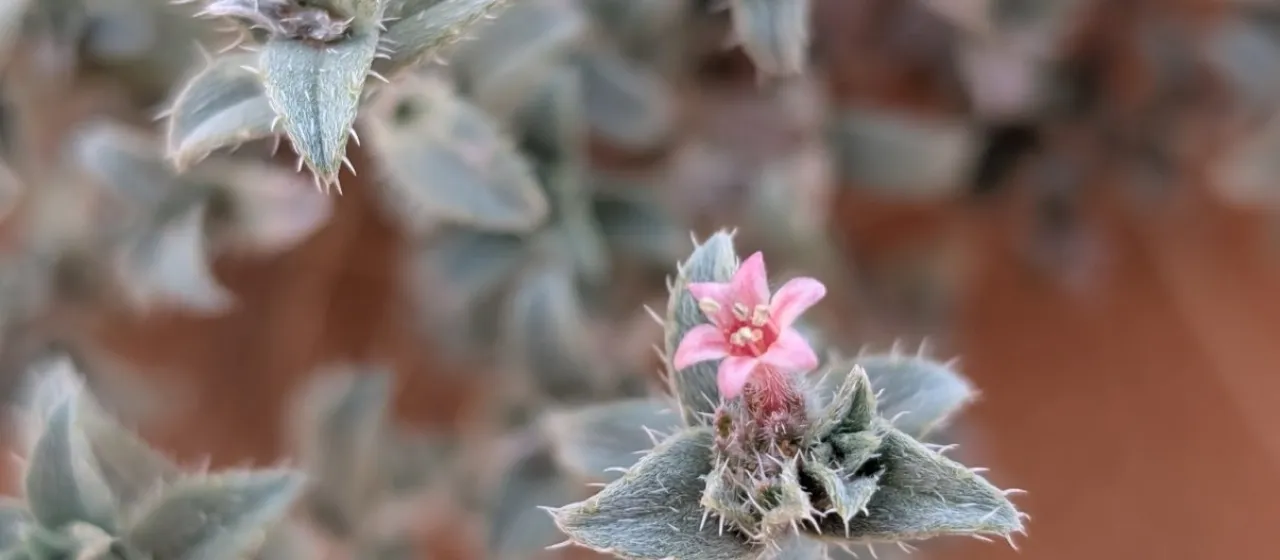
Description
Moltkiopsis ciliata is a perennial subshrub belonging to the Boraginaceae family, known for its remarkable ability to thrive in extremely arid environments. This plant is a typical inhabitant of sandy and stony landscapes in North Africa and Western Asia, where water availability is a major limiting factor for vegetation.
Botanically, the species is distinguished by its dense covering of fine hairs, which serves a critical physiological function by reducing transpiration and protecting the leaf tissues from intense solar radiation. The plant displays a compact, branching habit and a deep, extensive root system, allowing it to survive in nutrient-poor substrates with minimal water input.
In terms of agricultural suitability, Moltkiopsis ciliata is primarily recognized for its role in soil stabilization and erosion control. Its cultivation is highly specialized, requiring well-drained, sandy soils and full sun exposure. It is an ideal candidate for restoration projects in degraded desert environments where traditional crops cannot survive.
Regarding agrotechnology, the species demands very little maintenance. Irrigation should be kept to a minimum to prevent root rot, as the plant is highly susceptible to waterlogged conditions. Fertilizer requirements are negligible, as the plant is well-adapted to the low-nutrient status of desert soils, making it a low-input, sustainable choice for specific environmental niches.
While the plant is rarely threatened by typical pests in its wild habitat, gardeners and agricultural researchers should monitor for root pathogens in greenhouse or garden settings. Future research on Moltkiopsis ciliata continues to focus on its drought-tolerance mechanisms and potential chemical properties that could be utilized in phytomedicine or sustainable landscaping.
- Excellent tolerance to drought and heat.
- Effective for preventing soil degradation.
- Low requirements for fertilizers and water.
- Unique evolutionary adaptations to arid climates.