
Description
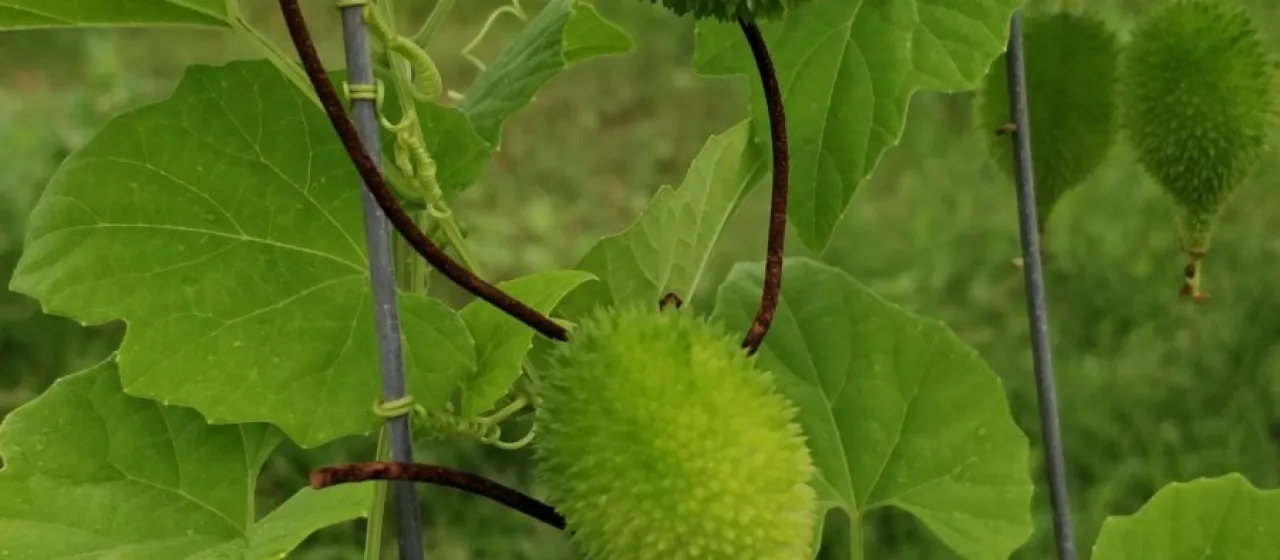
Momordica dioica, commonly known as the spiny gourd or teasle gourd, is a perennial flowering vine belonging to the Cucurbitaceae family. Unlike many other members of the genus that are annuals, this species produces tuberous roots, allowing it to survive through unfavorable seasonal conditions.
The species is indigenous to South and Southeast Asia, with a primary distribution spanning across India, Nepal, and Sri Lanka. It is well-adapted to tropical and subtropical environments, where it is cultivated in both home gardens and commercial farms for its nutritious fruits and medicinal properties.
Morphologically, the plant is characterized by a climbing vine habit, requiring structural support for optimal fruit production. The leaves are simple and lobed, and the flowers are dioecious, meaning male and female reproductive organs occur on separate plants. Successful pollination is critical and often relies on insect activity within the field.
In terms of agronomy, Momordica dioica thrives in well-drained, fertile soil with a slightly acidic to neutral pH level. It requires a warm climate and is highly susceptible to frost, which limits its commercial cultivation to specific temperature zones. Proper management involves trellis installation and controlled irrigation to maintain soil moisture during the active growth phase.
The crop is prone to various pests, including aphids, leaf miners, and fruit borers, which can significantly impact yield quality. Fungal diseases such as downy mildew and powdery mildew are also frequent challenges in high-humidity areas. Integrated pest management (IPM) strategies are essential to maintain crop health and ensure high agricultural productivity.