
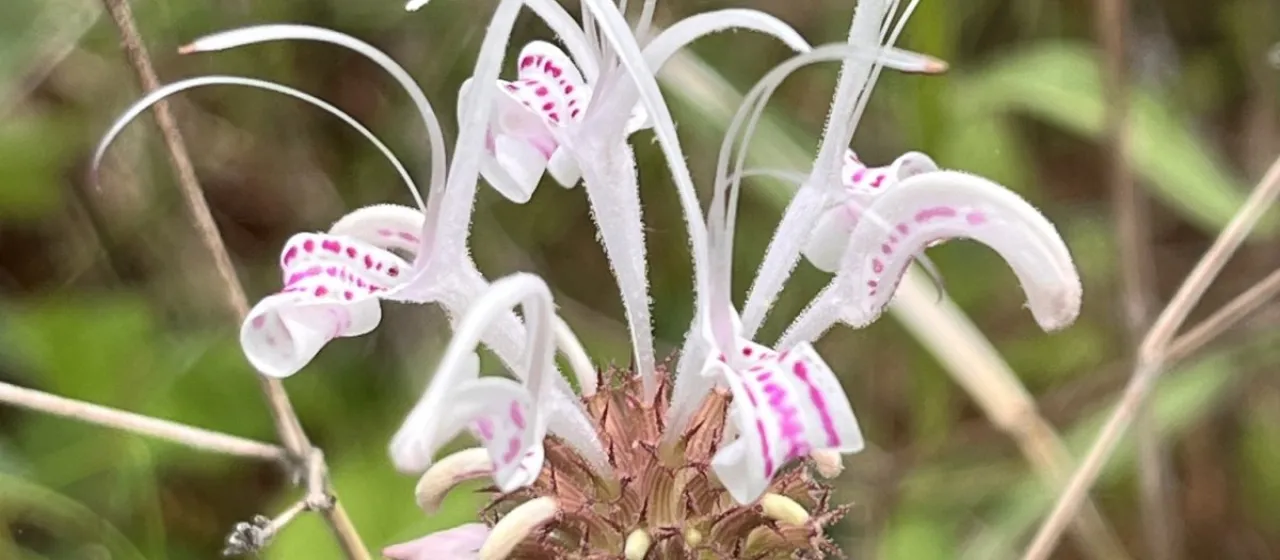
Description
Russel's bee balm (Monarda russeliana) is a perennial herbaceous plant belonging to the Lamiaceae family. This species stands out among other members of the genus for its elegance and specific botanical traits, frequently utilized in ornamental gardening as well as being a promising essential oil-bearing crop.
The plant is native to regions of North America, primarily the central and southern states of the USA. In the wild, it grows in open woodlands, rocky slopes, and prairies. Its cultivation range covers regions with a temperate climate where the plant can fully develop, preserving its unique biological characteristics.
Botanically, the plant is a bush with straight, square-shaped stems reaching a height of 40–60 cm. The leaves are opposite, lanceolate, and slightly serrated at the edges. The inflorescences are head-like, consisting of striking labiate flowers, typically white or pale pink with characteristic bracts. The plant has a pleasant aroma due to its high essential oil content.
For successful cultivation, Monarda russeliana requires sunny or lightly shaded areas with well-drained, fertile soil. The plant is fairly drought-tolerant once established, although it requires moderate watering during periods of active growth. Agricultural practices include regular soil cultivation, weed control, and the application of organic fertilizers during the vegetative stage.
Economic and practical uses of the species include:
- Ornamental landscaping and creating flower borders.
- Attracting pollinators, especially bees and butterflies, to the garden.
- Application in traditional herbal medicine as an antiseptic.
- Extraction of essential oils for the perfume and cosmetic industries.
Common cultivation challenges include a susceptibility to powdery mildew under conditions of high humidity and poor air circulation around the bush. Pests like spider mites may cause damage during dry seasons. Prevention involves maintaining proper plant spacing, implementing a balanced watering regime, and using biological fungicides at the first sign of disease.