
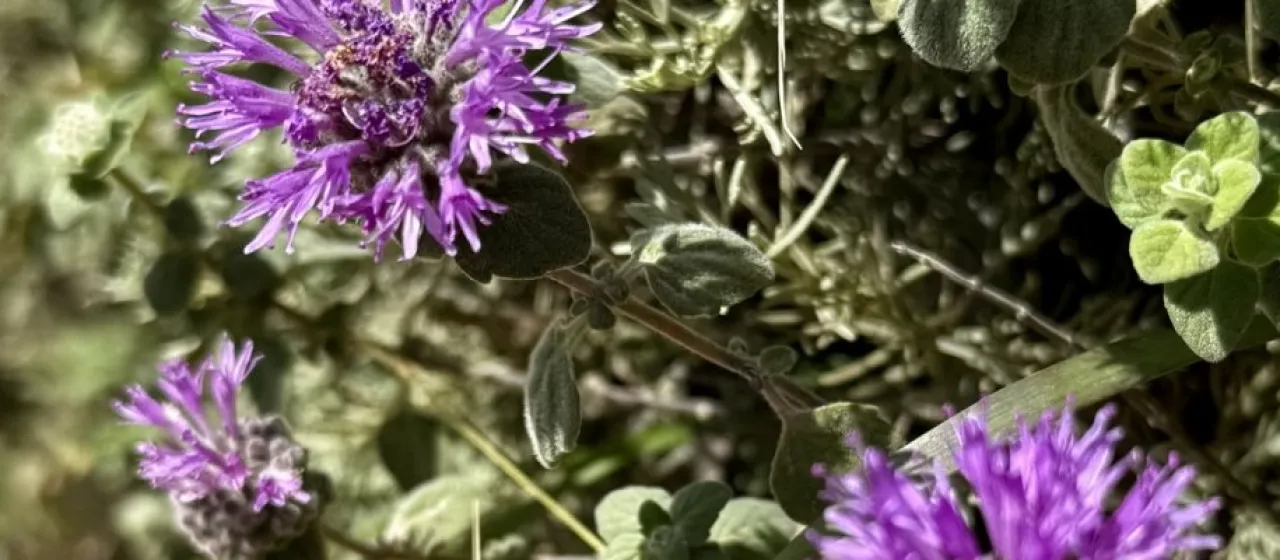
Description
Mountain balm (Monardella odoratissima) is a perennial aromatic herb belonging to the Lamiaceae family. It is highly valued for its intense minty and oregano-like fragrance, which makes it a notable candidate for specialty crop production in regions with Mediterranean-like climates.
Native to the western mountain regions of North America, this plant is well-adapted to rocky slopes and open woodland habitats. Its natural environment dictates its preferences for well-drained, sandy, or rocky soils, reflecting its evolutionary strategy of surviving in nutrient-poor but well-aerated substrates.
Botanically, the plant grows as a low, sprawling subshrub. Its leaves are lanceolate to ovate, often with a grayish-green hue due to fine hairs, which also serve to protect the plant from excessive moisture loss. The inflorescences are distinct, dense terminal heads of tubular flowers that provide significant nectar for local pollinators.
Regarding agrotechnical requirements, Mountain balm demands full sun and excellent drainage. Excessive soil moisture is the primary factor limiting its growth, often leading to rapid root decay. Irrigation should be applied strategically, avoiding waterlogging, while soil pH should ideally range from slightly acidic to neutral for optimal nutrient uptake.
The plant has diverse economic and practical applications, primarily as an ingredient in herbal infusions, culinary spice blends, and natural perfumes. Traditionally, it has been used by indigenous populations for its antiseptic and digestive properties. Producers should monitor for typical pests such as spider mites, especially in hot and dry weather, and fungal diseases caused by poor air circulation.