
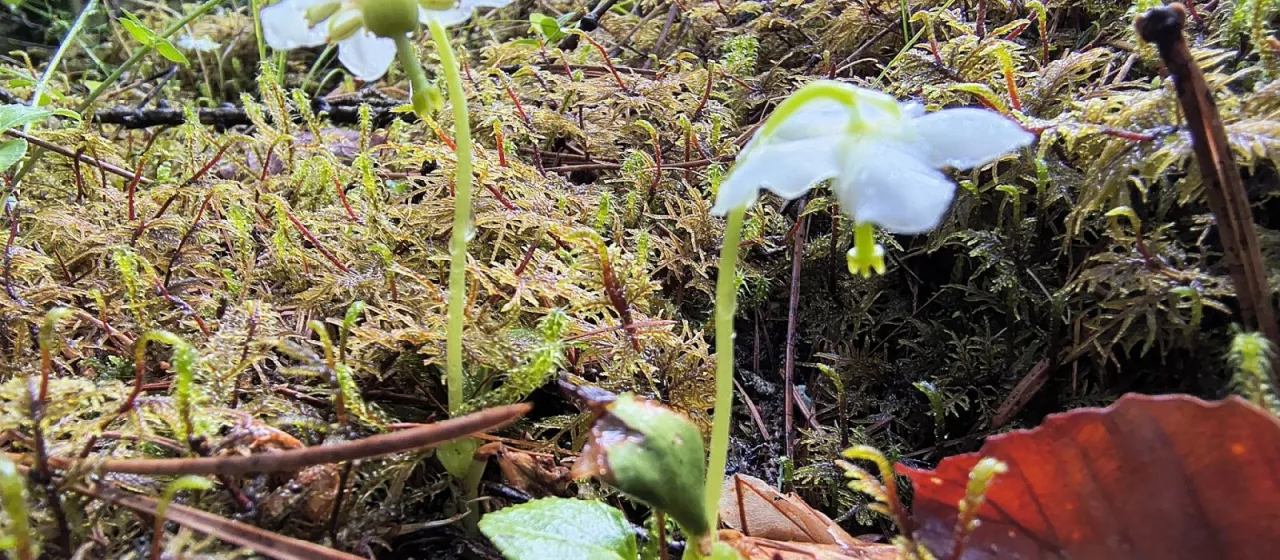
Description
One-flowered wintergreen (Latin: Moneses uniflora) is a small perennial herbaceous plant belonging to the Ericaceae family. While not a conventional crop for large-scale agricultural production, it is a plant of significant botanical interest due to its unique ecological role and its history in traditional herbal medicine.
The species is native to the circumboreal region of the Northern Hemisphere, found in temperate and cold coniferous forests across Europe, Asia, and North America. It thrives in shaded environments, particularly in moist, nutrient-rich soils covered with moss or coniferous litter, where it forms small, isolated patches under the forest canopy.
Botanically, the plant is characterized by a basal rosette of evergreen, leathery leaves and a single, fragrant, nodding white or pink flower supported by a slender scape. The root system is shallow and intricate, forming a critical mycorrhizal association with soil fungi, which is essential for the plant's nutrient uptake and survival in competitive forest conditions.
Regarding climate and soil requirements, Moneses uniflora is highly selective. It demands acidic, damp soil and high levels of atmospheric humidity. Successful cultivation is rarely achieved in standard garden settings because the plant depends entirely on the specific microclimatic conditions of an undisturbed woodland floor. Agricultural intervention is generally discouraged in favor of strict conservation.
Its historical uses include medicinal applications, where extracts from the plant were used for their purported anti-inflammatory and antiseptic properties. However, because the plant is sensitive to habitat degradation, it is often considered a bioindicator of forest health. Typical threats include fungal root rot and pathogens that thrive in fluctuating soil moisture levels, making it a fragile component of the forest ecosystem.