
Description
Monodora myristica, commonly known as calabash nutmeg, is an evergreen tropical tree belonging to the Annonaceae family. It is a significant agricultural crop valued primarily for its seeds, which possess an intense, aromatic flavor profile similar to true nutmeg, making them a staple spice in many culinary traditions.
The plant originates from the tropical regions of West Africa, where it thrives in lush, humid forest environments. Today, it is cultivated across various tropical climates worldwide, including parts of the Caribbean and South Asia, where the environmental conditions mimic its native forest habitat.
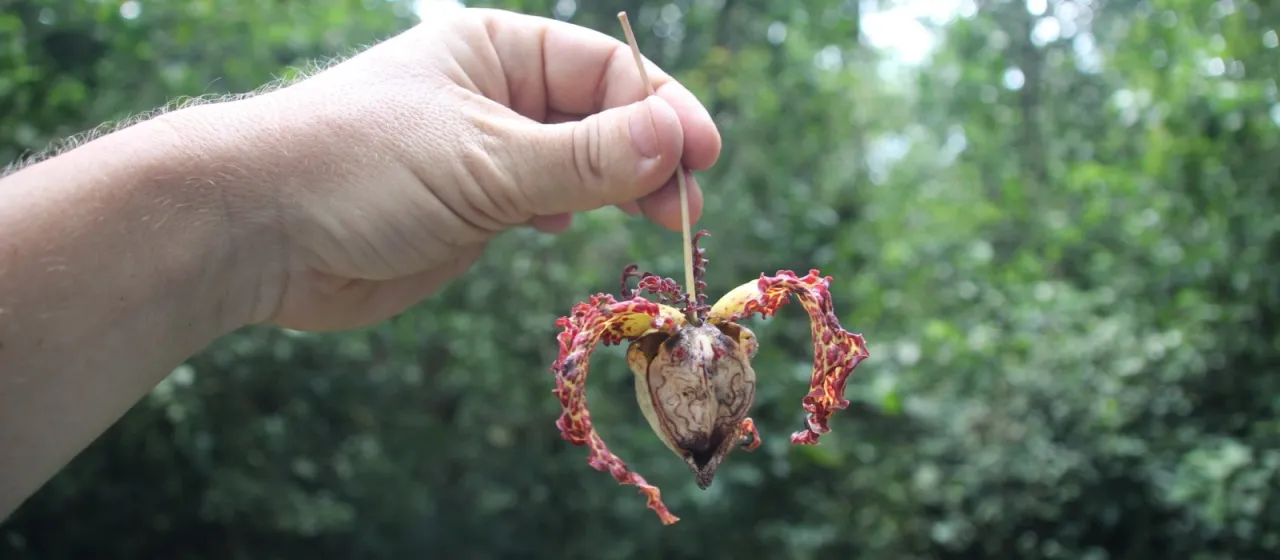
Botanically, the tree reaches a significant height, often growing between 10 and 20 meters. It is characterized by its large, leathery, dark green leaves and distinctive, pendulous flowers that exhibit striking yellow petals with reddish-brown spots. These flowers develop into large, globose fruits containing seeds that serve as the main product of the crop.
The cultivation of Monodora myristica requires deep, nutrient-rich soils that are well-drained. It is highly sensitive to frost and extreme drought, necessitating consistent rainfall or supplemental irrigation to maintain healthy growth. In a plantation setting, young trees require moderate shade to protect them from direct sun damage during their early stages of establishment.
Economically, the crop is utilized for its aromatic seeds, which are harvested, dried, and ground into powder for use as a condiment. Beyond culinary applications, the plant is studied for its potential medicinal properties, including antioxidant and antimicrobial activities. Its wood is also harvested for local carpentry, noted for its moderate durability.
- Thrives in tropical humid climates.
- Propagation primarily through seed germination.
- Requires fertile soil with high organic matter.
- Minimal pest pressure in well-managed agroforestry systems.