
Description
Desert Star (Monoptilon bellioides) is a small, herbaceous plant belonging to the Asteraceae family. Known for its remarkable adaptation to arid environments, it serves as a specialized crop model for studying survival strategies in desert ecosystems with minimal precipitation.
Native to the southwestern United States and northwestern Mexico, this species thrives in the harsh conditions of the Mojave and Sonoran Deserts. Its natural range is characterized by sandy, gravelly, or silty substrates where traditional crop irrigation systems would be impractical.
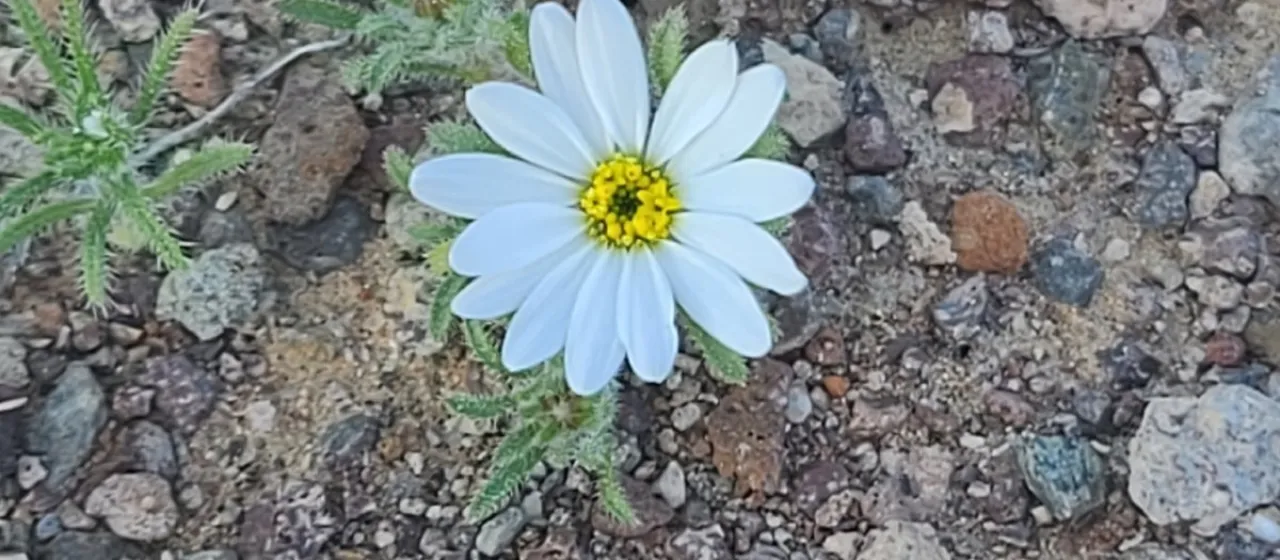
Botanically, Monoptilon bellioides is an annual that displays a basal rosette of narrow, hirsute leaves. It produces solitary, daisy-like flower heads with white to lavender-tinged ray florets, which are highly efficient at attracting pollinators in sparse desert environments.
Cultivation requirements for Desert Star revolve around excellent drainage and high solar radiation exposure. It does not tolerate heavy, water-logged soils, which can lead to rapid root rot. The plant follows a strictly opportunistic growth pattern, germinating rapidly after the first significant winter or spring rains.
Its primary agricultural and ecological roles include soil stabilization in arid zones and utility in decorative xeriscaping. While it is rarely subject to traditional crop pest infestations, management should focus on maintaining natural soil moisture levels and preventing soil compaction to ensure healthy development.