
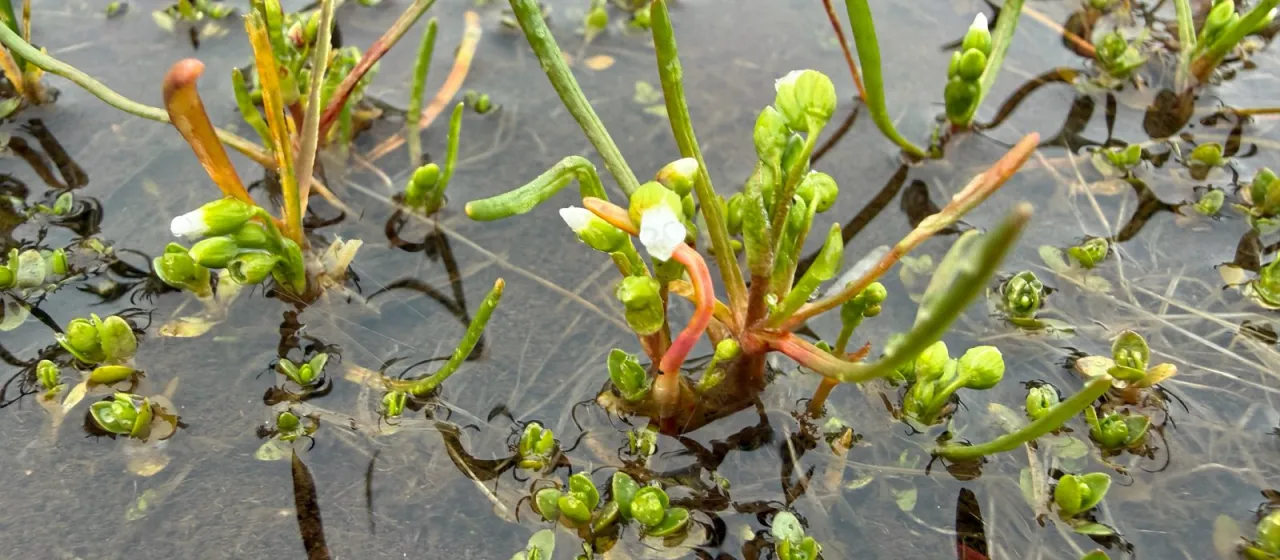
Description
Montia linearis, commonly known as linear-leaved montia, is an annual herbaceous plant belonging to the Montiaceae family. It is a specialized botanical species that has evolved to thrive in specific environmental niches, primarily within the western regions of the North American continent.
The geographic range of this plant extends from British Columbia down to California. It is typically found in open meadows, rocky slopes, and disturbed areas where it can capitalize on seasonal moisture. Its ability to grow in habitats with varying levels of light exposure makes it a resilient plant in its native ecosystem.
Botanically, the species is defined by its narrow, linear leaves and small, delicate flowers that usually emerge during the early spring. As an annual, it focuses its metabolic energy on rapid biomass production and seed set before the dry summer season, making it an efficient occupant of its ecological niche.
Regarding cultivation requirements, Montia linearis prefers well-drained, porous soils that do not retain excess water for long periods. While it can withstand temporary wet conditions, prolonged waterlogging often leads to root rot. Successful management in an experimental or small-scale setting requires cool temperatures and sufficient sunlight during the germination phase.
In terms of agricultural and ecological application, this species is mainly studied for its potential in land restoration and erosion control on disturbed slopes. While it is not a traditional food crop, its rapid growth cycle offers value in studies concerning soil stabilization. Potential pests include various types of aphids and root-dwelling pathogens if the soil remains excessively damp.
- Family: Montiaceae
- Plant type: Annual herb
- Native region: Western North America
- Soil preference: Well-drained, sandy-loam