
Description
The Brimstone tree (Morinda lucida) is a perennial tropical species belonging to the Rubiaceae family. Known locally in parts of Africa for its versatility, it serves as a significant biological resource, functioning as both a botanical source of medicinal compounds and a provider of high-quality raw materials for traditional industries.
Originating from the tropical regions of Africa, Morinda lucida is naturally distributed across countries spanning from Senegal to Ethiopia and down to the southern African regions. It thrives in various habitats, ranging from secondary rainforests to lowland savannas, exhibiting high adaptability to diverse ecological conditions within the humid tropics.
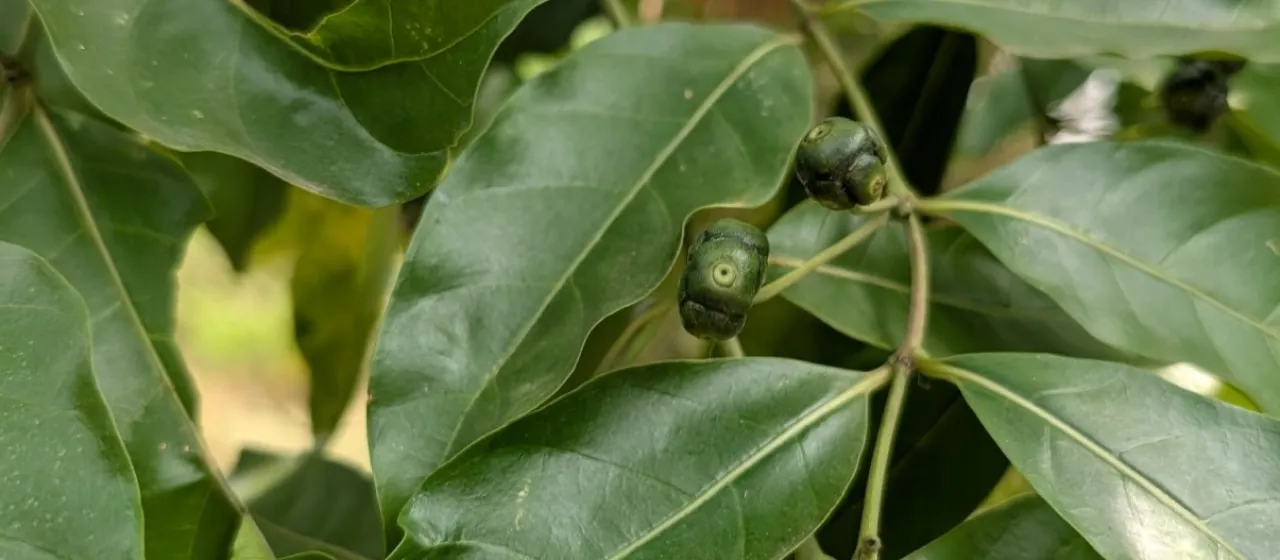
Botanically, the species presents as an evergreen tree or large shrub that can grow up to 18 meters tall. Its leaves are opposite, elliptic, and distinctly glossy, which is a hallmark feature of the plant. The flowers are white, appearing in globose heads, which develop into compound fruits composed of small, fleshy drupes that are typically inedible to humans but appreciated by local fauna.
Cultivation requires adherence to tropical agricultural standards, prioritizing well-drained loamy soils and consistent, high rainfall. The plant thrives in environments with high humidity and temperatures generally above 20°C. Farmers typically start cultivation using seeds, which are planted in nurseries before being transplanted into the main field once they reach sufficient height and stability.
Economically, the Brimstone tree is valued for its pharmacological profile, particularly its documented anti-inflammatory and antimalarial properties. Beyond medicine, it is a staple in local dye production, where roots and bark provide intense pigments for textile arts. Furthermore, its wood is valued for its durability, used in carving agricultural tools and in small-scale construction projects.
- Susceptible to defoliating insects in dense, moist plantation settings.
- Root rot may occur if the soil is poorly drained or waterlogged.
- Regular pruning helps manage the height and canopy density for easier harvesting.
- The species is an excellent candidate for reforestation and agroforestry programs.