
Description
Mucuna bennettii, commonly known as the Red Jade Vine, is a striking evergreen woody climber belonging to the Fabaceae family. This plant is globally recognized for its spectacular, vivid inflorescences, which give it significant ornamental value while serving as a robust grower in tropical ecological systems.
The species originates from New Guinea. In its natural habitat, it thrives in dense tropical rainforests, climbing high into the canopy to reach sunlight. Its cultivation range is restricted to tropical and subtropical climates where temperatures remain consistently warm, as the plant is highly susceptible to cold damage and cannot survive even light frosts.
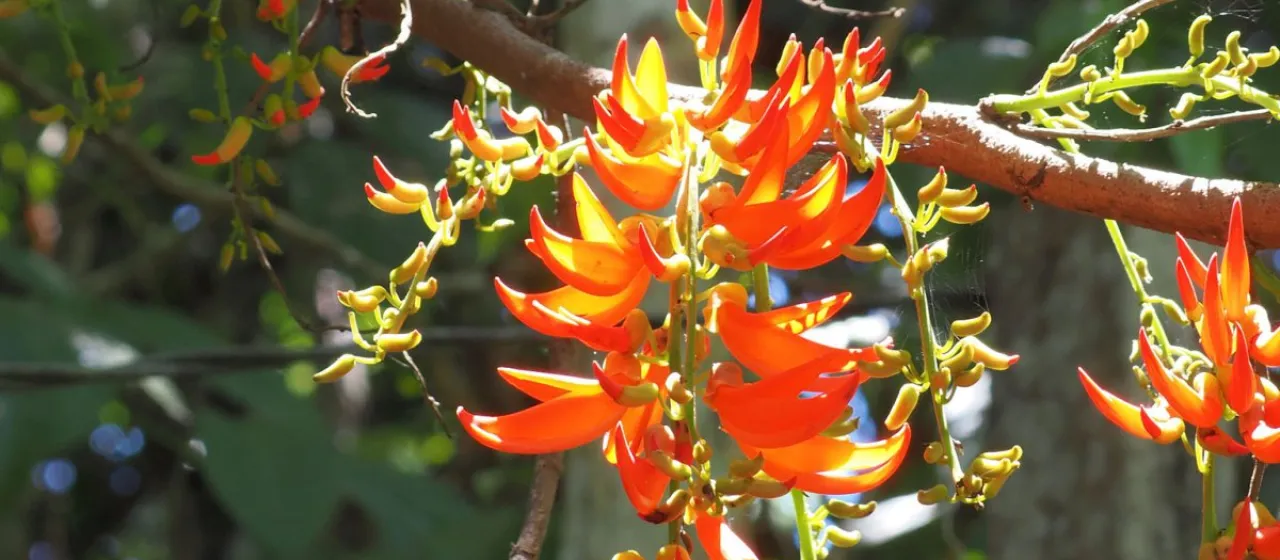
Botanically, Mucuna bennettii is characterized by large, trifoliate leaves and vigorous, twining stems. Its most prominent feature is the pendulous raceme, which can reach up to 50 cm in length. The individual flowers are beak-shaped and exhibit a brilliant orange-red color, attracting various pollinators, including nectar-feeding birds and insects.
Successful cultivation requires rich, well-drained soil with a slightly acidic to neutral pH. High humidity and consistent moisture are essential for optimal growth. Because of its vigorous climbing habit, the plant requires substantial, sturdy supports. Propagation is typically achieved through seeds or stem cuttings under controlled greenhouse conditions in non-tropical regions.
While primarily used in high-end landscaping and botanical gardens, Mucuna bennettii can serve as a ground cover or green manure in specific tropical agro-forestry systems. Common pests include aphids and mites, while root rot is the most frequent disease, usually triggered by waterlogged soils or poor air circulation. Proper maintenance involves regular pruning to manage its rapid growth.