
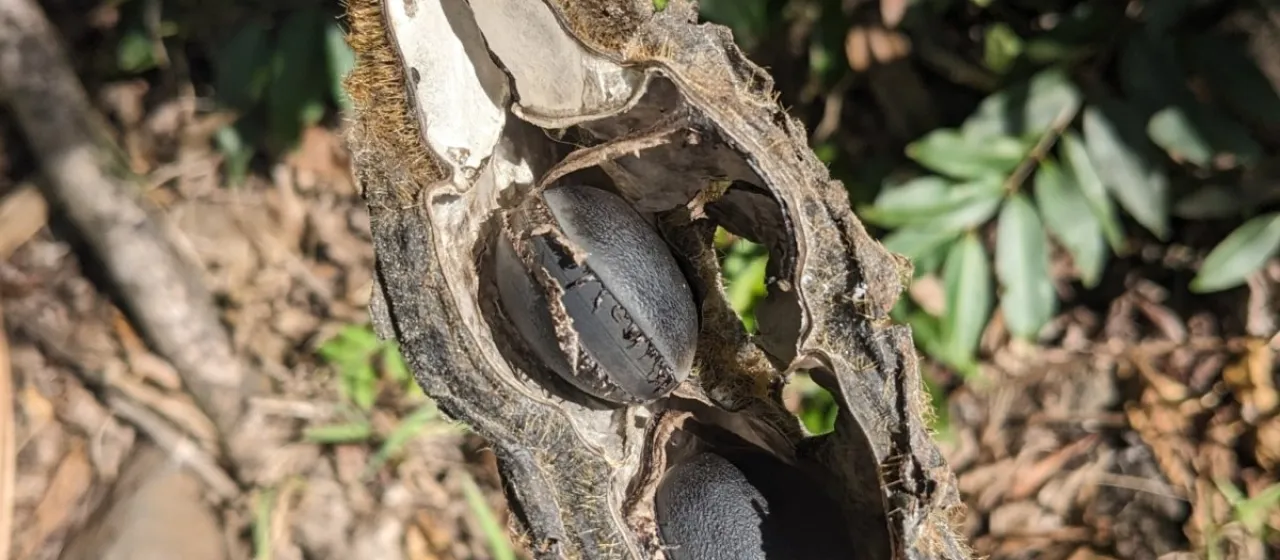
Description
Mucuna sloanei is a perennial tropical vine belonging to the Fabaceae (legume) family. This species is recognized for its vigorous growth habits and its significant role in tropical land management, primarily due to its ability to cover soil rapidly and improve overall fertility through organic matter deposition.
Native to the tropical regions of the Americas, this plant has adapted to diverse humid environments across the globe. It thrives in tropical climates characterized by high temperatures and consistent rainfall, where it is often utilized to protect vulnerable tropical soils from the harsh effects of high-intensity solar radiation and erosion.
Botanically, it is classified as a robust woody vine featuring compound leaves and large, distinctive pods. A notable botanical feature of many Mucuna species, including Mucuna sloanei, is the presence of fine, stinging hairs on the pods, which act as a natural defense mechanism against herbivores and environmental stressors.
Agronomic requirements for this crop involve well-drained, fertile soil and adequate space for climbing or spreading. While it is highly resilient, it performs best when provided with sufficient sunlight and consistent soil moisture. It is typically propagated from seeds, which possess a thick seed coat, often requiring pre-treatment for optimal germination rates.
The economic value of this crop is primarily found in its utility as a green manure and cover crop. Its ability to fix atmospheric nitrogen is a critical benefit for sustainable farming systems. While it has potential as a fodder source, its application in livestock diets requires careful management due to the presence of specific alkaloids or protease inhibitors common in the genus.
- Rapid biomass accumulation
- Significant nitrogen-fixing capacity
- Effective suppression of competitive weeds
- Restoration of degraded soil structure