
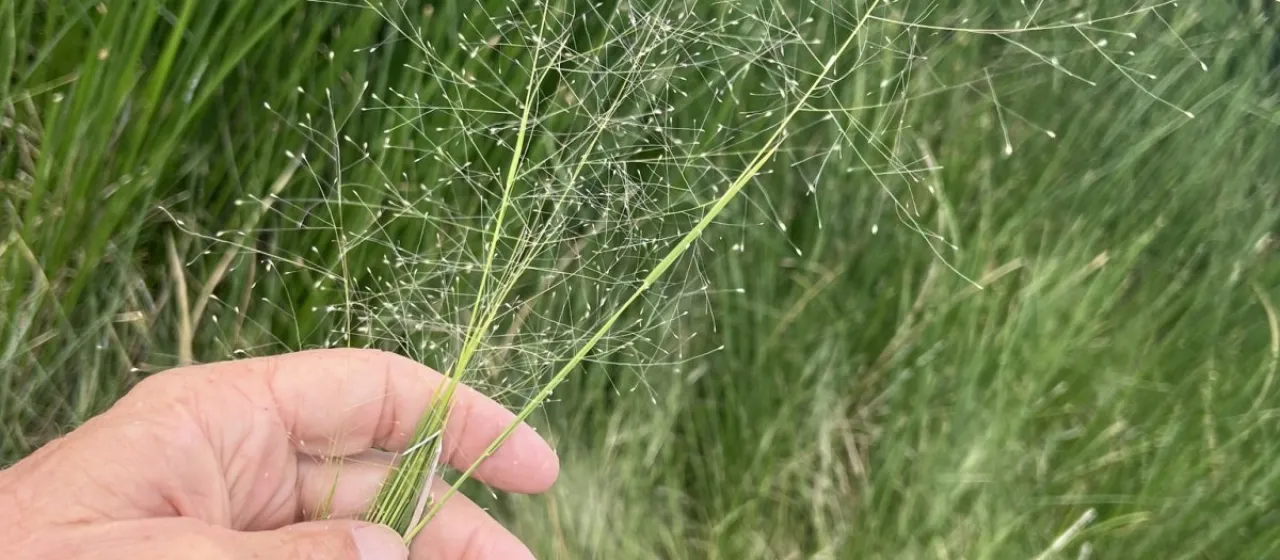
Description
Alkali muhly (Muhlenbergia asperifolia) is a perennial grass species belonging to the Poaceae family. Known for its slender stems and creeping rhizomes, it forms dense mats that effectively cover the soil surface, providing stability in various environmental conditions.
Native to North America, this species is commonly found in western regions, specifically thriving in saline or alkaline soils, marshes, and meadows. Its natural distribution is a testament to its exceptional tolerance for soil salinity and varying moisture levels.
Botanically, the plant features delicate, spreading panicles that give it an airy appearance. The leaves are narrow and often exhibit a grayish-green color. This plant is well-adapted to habitats where other vegetation may struggle due to soil chemistry or temporary waterlogging.
From an agricultural standpoint, Alkali muhly is considered a valuable species for land management. It does not require intensive fertilization or cultivation practices, making it a low-input option for revegetation projects in arid or semi-arid environments that have been degraded.
Primary applications include the following:
- Mitigating soil erosion in sensitive areas.
- Restoration of saline, disturbed, or damaged lands.
- Providing supplementary forage for livestock in extensive grazing systems.
In terms of plant health, the species is generally robust but can be susceptible to fungal infections in poorly drained conditions with stagnant water. Insect pests such as mites or specific grass-feeding flies can occasionally cause damage to foliage, requiring standard monitoring to ensure the vigor of the plant stand.