
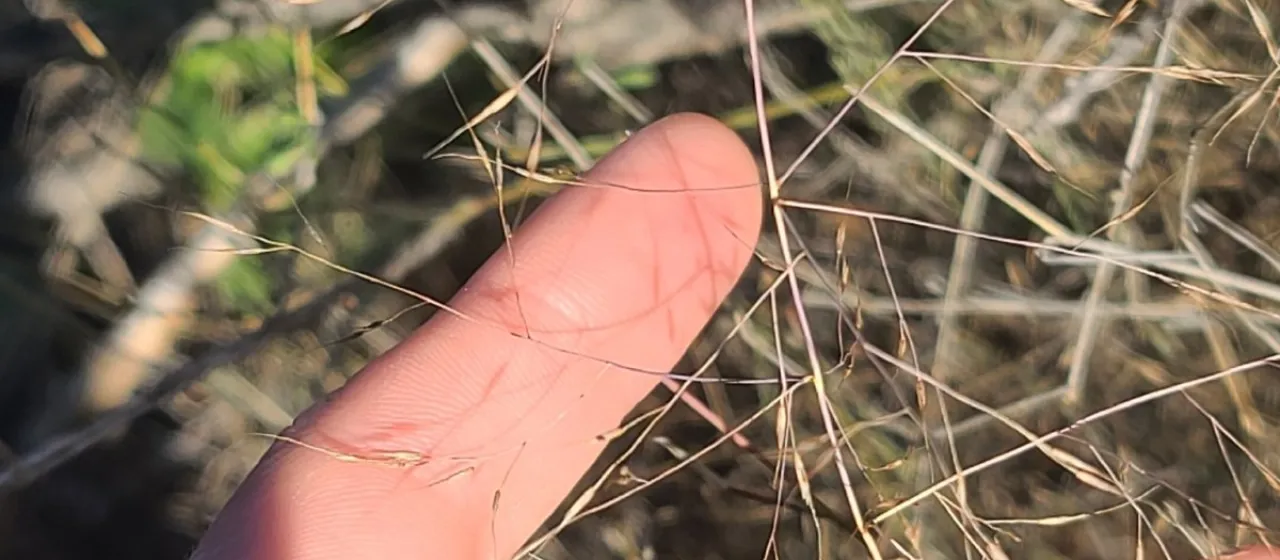
Description
Porter's muhly (Muhlenbergia porteri) is a perennial grass species belonging to the Poaceae family. In agricultural terms, it is recognized as a highly resilient forage grass capable of thriving in desert environments, serving as a critical component in the vegetation of arid rangelands.
The plant originates from the Southwestern United States and Northern Mexico, where it is native to dry desert plains and rocky foothills. Its distribution range is specifically tied to regions that experience long, intense dry seasons, making it a key species for ecological preservation and rangeland management in those climates.
Botanically, it forms dense, tangling clumps of thin, wiry stems that frequently grow in association with shrubs for structural support. The foliage is narrow and hardened, an adaptation designed to reduce water loss. The root system is notably extensive and deep, which allows the plant to access moisture far below the soil surface, ensuring survival through prolonged droughts.
Cultivation requirements involve minimal inputs, as the grass is adapted to low-nutrient, well-draining sandy or gravelly soils. Agrotechnical management primarily focuses on controlled grazing intensity, as the plant needs sufficient rest periods to recover. It thrives in full sunlight and is intolerant of waterlogging, which often leads to root damage and subsequent decay.
The primary agricultural and environmental uses for Porter's muhly include:
- Providing high-quality forage for livestock in desert conditions.
- Stabilizing loose desert soils to prevent erosion.
- Serving as cover for local wildlife and smaller mammals.
- Assisting in the rehabilitation of degraded rangeland ecosystems.
The plant is generally hardy and displays significant resistance to common agricultural pests and diseases. However, overgrazing remains the greatest threat to its longevity, often causing the stand to thin out. Occasional infestations by grasshoppers or other herbivorous insects may occur during dry years, but the plant typically maintains its vigor if managed with proper grazing intervals.