
Description
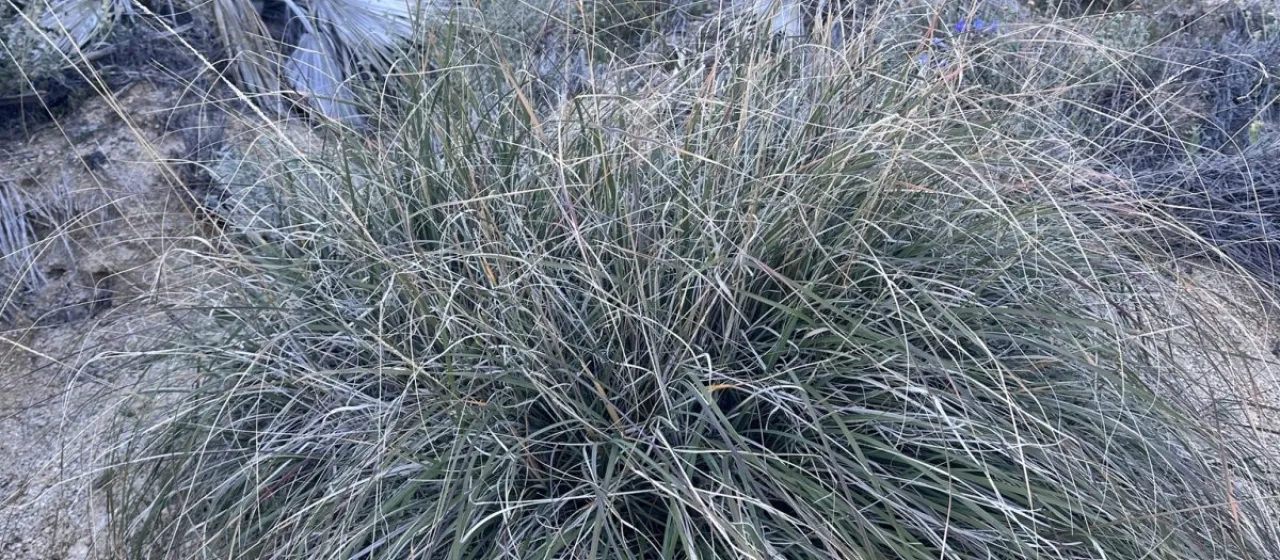
Deer grass (Muhlenbergia rigens) is a perennial bunchgrass belonging to the Poaceae family. It is highly regarded in both agricultural landscaping and ecological restoration for its architectural form, resilience, and minimal maintenance requirements, making it a staple for drought-tolerant gardening.
Originating from the southwestern United States and Mexico, this species has adapted to arid and semi-arid environments. It thrives in open grasslands and along canyon floors, demonstrating remarkable heat tolerance and the ability to survive prolonged drought periods after the root system has become established.
Botanically, Muhlenbergia rigens forms dense, circular clumps of narrow, leathery leaves. The plant exhibits a distinct growth pattern, with vegetation reaching up to 3 feet in height, while its narrow, spike-like panicles can extend significantly higher, often reaching 5 feet. These inflorescences provide significant vertical interest from late summer through autumn.
The cultivation requirements are specific: the plant demands full sun and well-draining soil. It is highly adaptable to various soil textures, including rocky and sandy substrates, but it will not tolerate poor drainage. Proper maintenance involves cutting the plant back to several inches above the ground once a year in late winter or early spring to prevent thatch accumulation.
Economic and landscaping applications include:
- Utilizing as a sustainable option for slope stabilization to prevent soil erosion.
- Incorporating into native plant gardens and drought-resistant landscapes.
- Providing natural habitat and shelter for local fauna, including beneficial insects.
Regarding health management, the species is remarkably pest-free. The primary concern for growers is root rot caused by stagnant water or excessively wet winter conditions. By ensuring excellent soil drainage and avoiding overhead irrigation during humid periods, growers can prevent most common physiological disorders and ensure the plant's longevity.