
Description
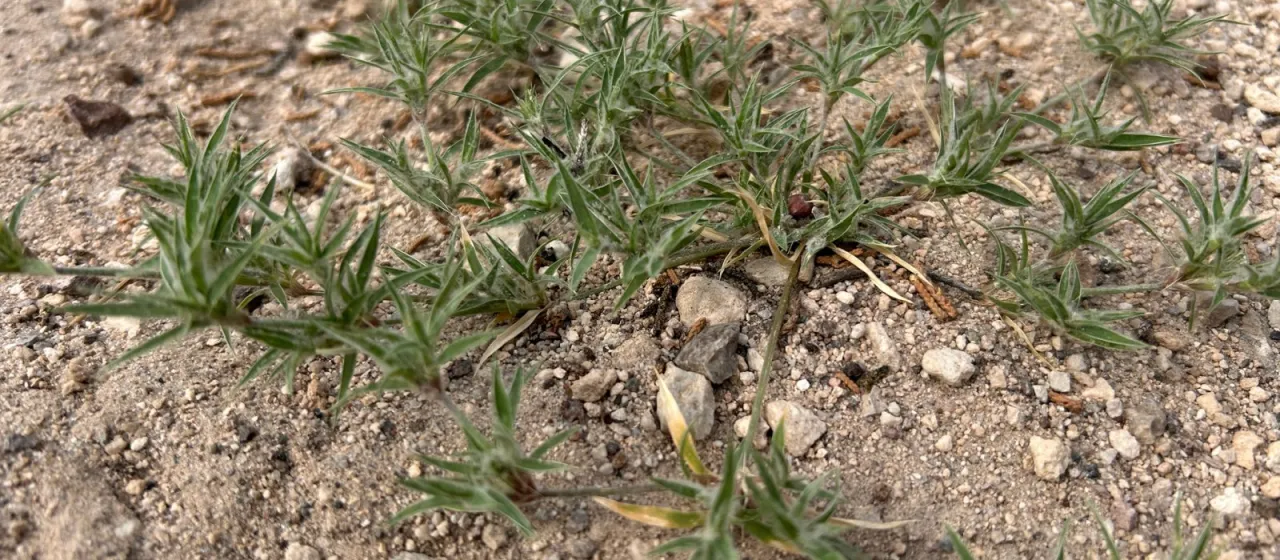
False buffalo grass (Munroa squarrosa) is an annual grass species belonging to the Poaceae family. This plant is recognized for its prostrate, mat-forming growth habit, which allows it to thrive in harsh environments where it can effectively minimize transpiration and withstand significant mechanical stress.
Native to the arid regions of North America, particularly the western United States and parts of Canada, this plant has adapted to open plains and dry, semi-desert landscapes. Its distribution is closely linked to environments with low annual precipitation and high thermal variability throughout the growing season.
The botanical characteristics of Munroa squarrosa include short, stiff, prickly leaves arranged in dense clusters at the nodes. The inflorescences are small and inconspicuous, often partially hidden by the upper leaves, which serves as a strategy to protect the reproductive structures from extreme heat and herbivores.
Regarding soil and climatic requirements, this grass is highly specialized. It flourishes in sandy, gravelly, or loam-based soils with excellent drainage. It does not tolerate waterlogging, and successful growth is typically observed in areas where competition from taller, invasive vegetation is minimal due to moisture limitations.
The agricultural and environmental utility of this plant is multifaceted, focusing primarily on ecological restoration and rangeland sustainability:
- Soil stabilization in sandy desertification-prone areas.
- Serving as a hardy forage component in extensively managed grazing systems.
- Contributing to biodiversity in semi-arid rangelands where it provides cover for local fauna.
- Resilience against common pests, although it can be susceptible to fungal pathogens if exposed to excessive stagnant moisture.