
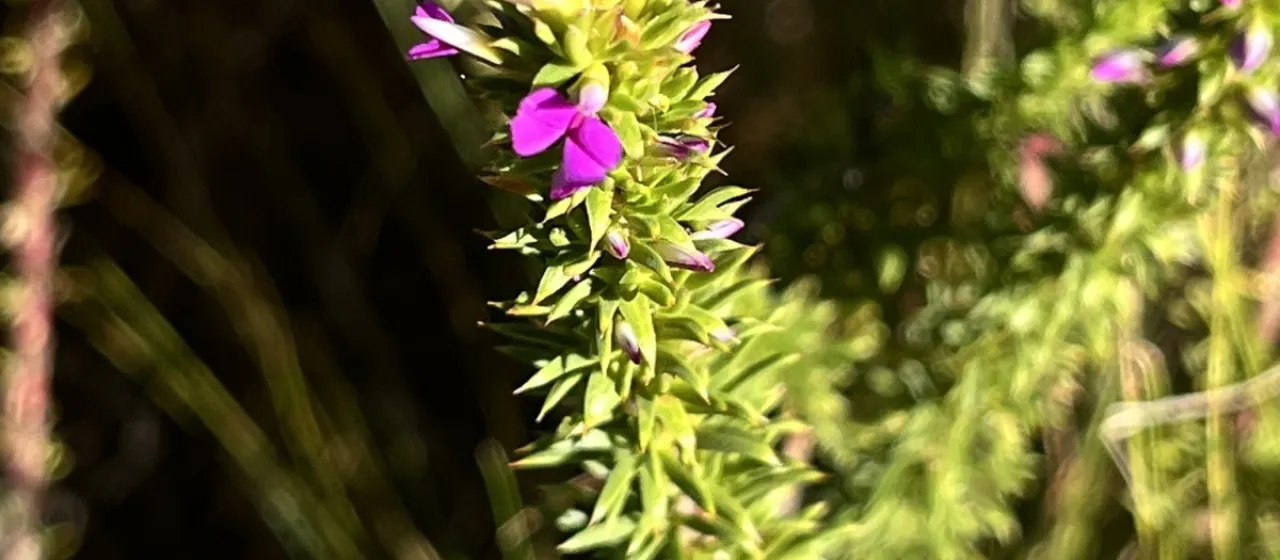
Description
Muraltia heisteria is a perennial evergreen shrub belonging to the Polygalaceae family. This species is highly regarded for its botanical uniqueness and its resilience, having evolved in the diverse and challenging ecosystems of the Cape Floristic Region in South Africa.
The plant originates from the Southern African continent, specifically in regions characterized by fynbos vegetation. It thrives in sandy, well-draining soils and is naturally adapted to a Mediterranean-like climate, experiencing wet winters and prolonged, hot, dry summers that necessitate specialized physiological adaptations for water retention.
Botanically, Muraltia heisteria is recognized by its rigid, needle-like leaves, which serve as an effective mechanism against excessive transpiration. The plant produces numerous small, striking flowers that contribute to its role in local biodiversity. Its growth habit is typically bushy, making it a robust component of the shrubbery in its native habitat.
Regarding agrotechnical requirements, successful cultivation depends on mimicking its natural environment. It requires high light intensity and an extremely well-draining substrate, preferably with a slightly acidic profile. Over-watering is the most common cause of failure in cultivation, as the root system is highly susceptible to decay in waterlogged conditions.
In terms of economic application, Muraltia heisteria is primarily utilized in ornamental horticulture and xeriscaping, where its drought tolerance makes it a valuable asset for water-wise landscaping. While it is not a traditional food crop, it holds significance in botanical research and conservation. Common health issues include fungal root pathogens and susceptibility to scale insects, both of which can be managed through proper site selection and strict adherence to irrigation schedules.