
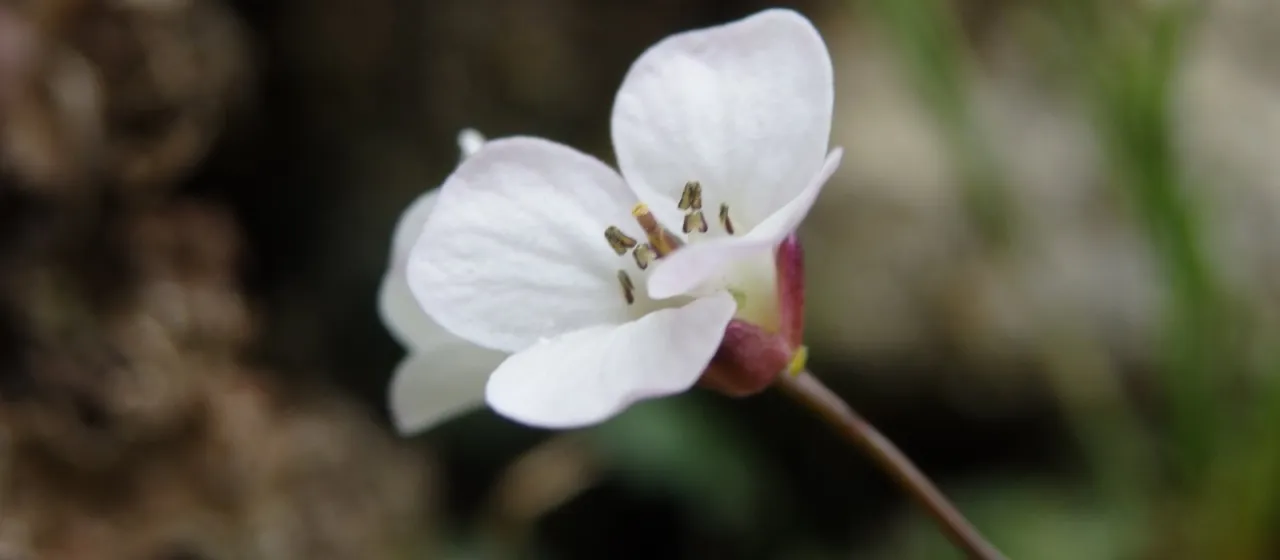
Description
Murbeckiella sousae is a rare and specialized plant species belonging to the Brassicaceae (mustard) family. While not a conventional agricultural crop, it is a significant subject of study for botanists and researchers focused on the genetic preservation of rare alpine species.
The plant is a strict endemic to Portugal, specifically found within the restricted mountain regions of the Serra da Estrela. Due to its limited distribution and sensitivity to environmental changes, it is considered a conservation priority. Cultivation is currently limited to highly controlled research facilities and specialized botanical gardens.
Botanically, it is a perennial herb characterized by a rosette of pubescent, greyish leaves designed to withstand high-altitude UV radiation and wind. The plant demonstrates high adaptation to extreme cold and drought. Its flowering cycle is short, reflecting its evolution in an environment with a very brief growing season.
Agricultural or technical requirements for this species include specific soil composition, typically requiring rocky, mineral-rich substrates with excellent drainage. It does not thrive in standard garden soils due to the high risk of root rot. Propagation is difficult and requires strict temperature and humidity control that mimics its natural high-altitude environment.
In terms of potential usage, research focuses on its resilience genes, which could be relevant for future breeding programs aiming to develop stress-tolerant crops. Common threats include specialized fungal pathogens that target the root crown, often exacerbated by high humidity. Effective management requires minimal intervention and strict adherence to the plant's ecological constraints.