
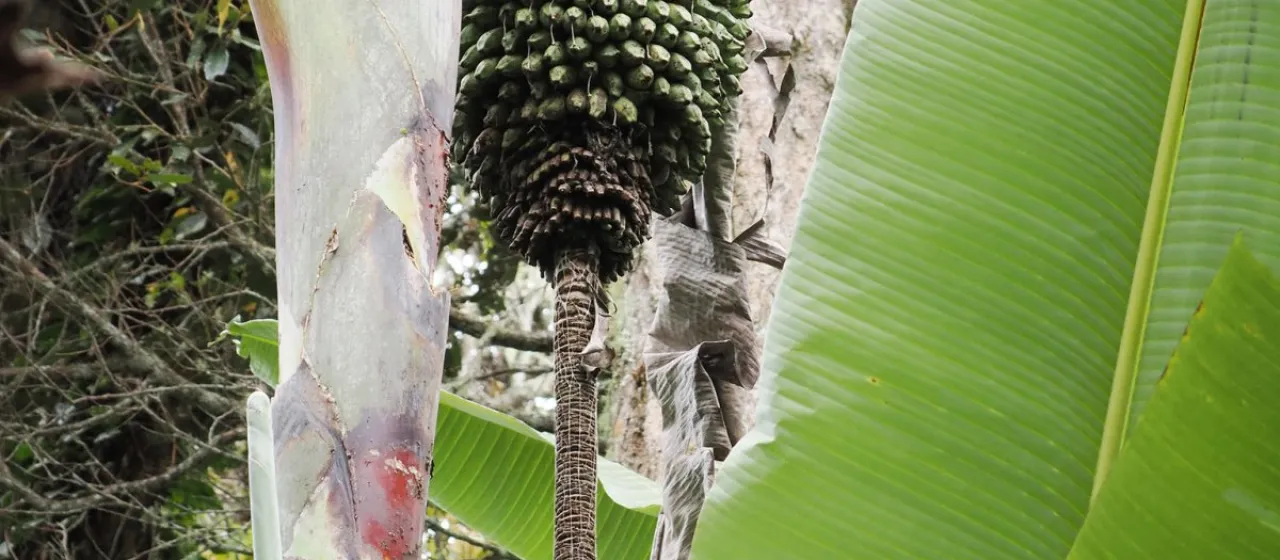
Description
Musa ingens is a remarkable botanical wonder belonging to the Musaceae family. Recognized as the largest member of the banana genus, this species can reach heights of up to 15 meters. Its pseudostem is exceptionally thick, making it not only the largest banana plant but also one of the most substantial herbaceous plants documented on Earth.
The species is endemic to the high-altitude tropical rainforests of New Guinea. It thrives in environments characterized by cool, mist-covered mountains and consistently high humidity. Unlike commercial banana varieties, Musa ingens is specifically adapted to mountainous terrain, avoiding the intense heat typical of lowland tropical regions.
Botanically, the plant displays massive leaves capable of capturing significant solar energy. The inflorescences are pendulous and bear large bunches of fruit that are heavily seeded, which is a key characteristic separating it from edible Cavendish-type bananas. The entire plant structure is adapted to support its immense weight while maintaining rapid growth in nutrient-rich forest soils.
Cultivation requirements for Musa ingens are strict and difficult to replicate outside its natural habitat. It requires a stable, humid climate, well-draining soil rich in organic matter, and partial shade to protect its leaves from desiccation. Attempts to cultivate this species commercially are rare due to its slow maturation and sensitivity to environmental shifts.
Regarding its utility, the species is mainly utilized in the following ways:
- Local indigenous use of its oversized leaves for shelter and food wrapping.
- Extraction of fibers from the pseudostem for crafting traditional ropes and mats.
- Genetic research aimed at identifying traits for disease resistance in commercial bananas.
Common health issues include fungal root rot triggered by poor soil aeration and susceptibility to specific tropical pests such as banana borers. Agricultural management revolves around maintaining the delicate balance of soil moisture and providing sufficient nutrients to support the plant's massive physiological demands during its multi-year life cycle.