
Description
The common medlar (Mespilus germanica L.) is a deciduous fruit tree belonging to the Rosaceae family. Native to Southwestern Asia and Southeastern Europe, it has been cultivated for thousands of years. It is a unique species that thrives in temperate climates, valued both as an ornamental plant and for its edible, unique-tasting fruit.
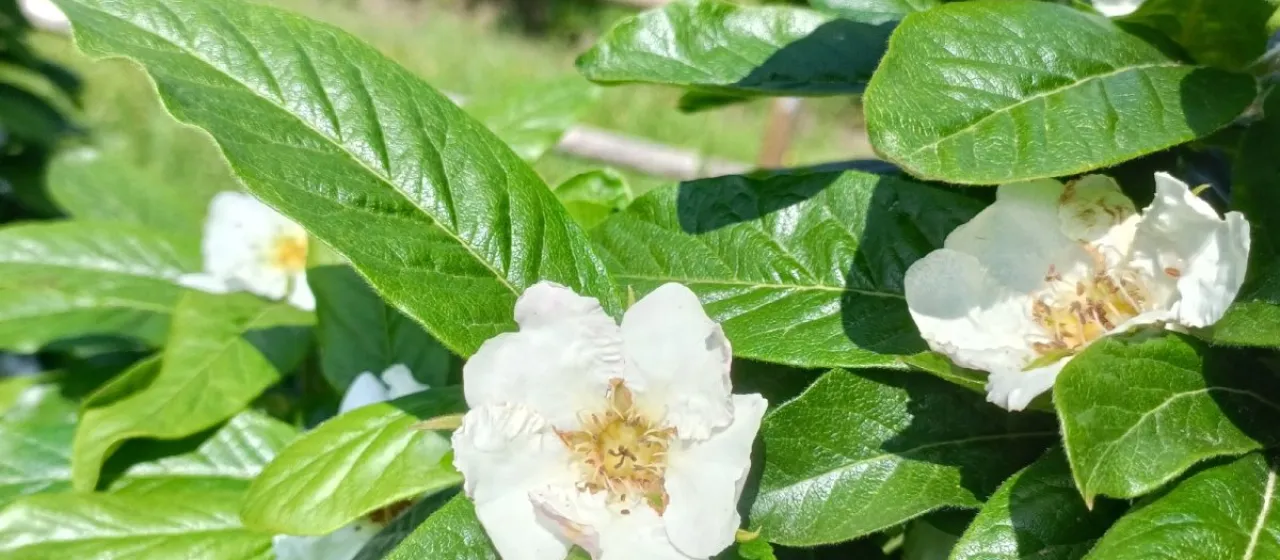
Botanically, the medlar is a small tree, usually reaching 4–6 meters in height. It features large, dark green leaves and distinctive large white or pink-tinted flowers in late spring. The fruit is firm and tart until it undergoes a specific process called "bletting," where it softens and turns a dark brown color, becoming sweet and jelly-like after exposure to frost or storage.
Medlar trees prefer temperate, cool climates and are remarkably cold-hardy. They are best suited for deep, fertile, and well-drained loamy soils. They can tolerate slightly acidic to neutral soil pH levels. It is crucial to choose a planting site that receives full sun or partial shade, protected from strong winds to ensure optimal tree health and fruit development.
Agricultural management is relatively simple compared to other fruit species. The tree requires minimal pruning to maintain a clean structure and promote air circulation within the canopy. Regular watering is necessary during dry spells, especially for young trees. Nutrient needs are met by applying balanced fertilizers in early spring, while mulch can help retain moisture in the root zone.
In terms of agricultural utility, medlars are highly esteemed in artisanal food production, particularly for making jellies, jams, and liqueurs due to their high pectin content. While the tree is quite resilient, gardeners should remain vigilant against common pests like aphids and diseases such as fire blight or powdery mildew, ensuring healthy production year after year.