
Description
Mussaenda macrophylla is a striking evergreen tropical shrub belonging to the Rubiaceae family. Renowned for its unique botanical structure, the plant produces small tubular flowers that are framed by large, brightly colored sepals, which persist for long periods and provide a vivid display in tropical landscapes.
The species originates from the tropical forests of the Himalayas, China, and Southeast Asia. In its natural habitat, it serves as an understory shrub, thriving in areas with dappled sunlight and consistently high humidity. Due to its aesthetic appeal, it is widely cultivated in botanical gardens and landscapes across warm-climate regions of the world.
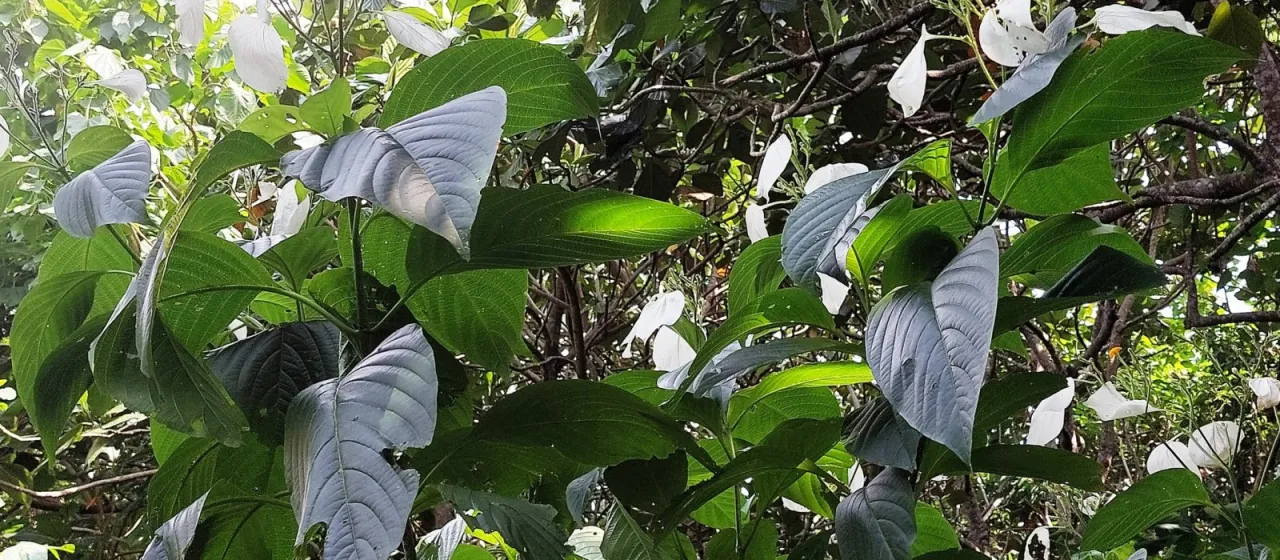
Botanically, the plant is characterized by its large, elliptic leaves with prominent venation and robust woody stems. It can grow into a substantial shrub reaching heights of up to four meters. The most striking feature is the enlarged, leaf-like sepal, which often turns a vibrant orange or reddish-orange hue, contrasting beautifully with the deep green foliage.
Cultivation requirements necessitate a warm, frost-free environment with high humidity levels. The soil must be acidic, well-draining, and rich in organic matter to support healthy growth. Regular watering is essential during the active growing season, though the soil should never become waterlogged. Consistent pruning is highly recommended to maintain a compact, bushy habit and encourage prolific blooming.
In agricultural and ornamental practice, Mussaenda is primarily used for landscaping as a feature plant. Common pests include spider mites and mealybugs, which thrive in indoor environments or dry conditions. Fungal issues, such as root rot, are usually a result of poor drainage or overwatering, making site selection and soil preparation critical for long-term health.
- Sunlight: Bright, filtered light.
- Soil Type: Acidic, fertile, well-draining loamy soil.
- Water: Consistent moisture without waterlogging.
- Pruning: Heavy pruning after the flowering phase.