
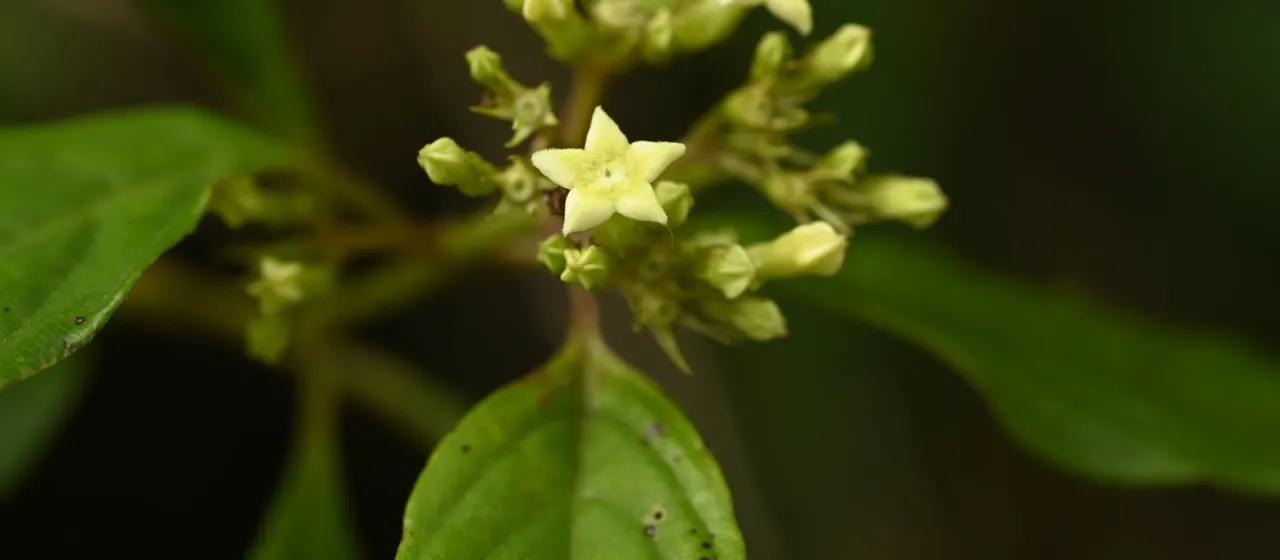
Description
Mussaenda parviflora is an evergreen ornamental shrub belonging to the Rubiaceae family. This species is highly valued in horticulture for its distinct inflorescences, where one of the calyx lobes of a flower expands into a large, petal-like structure, adding significant aesthetic value to the foliage during the flowering season.
Originating from East Asia, specifically Japan and China, this plant naturally thrives in the understory of moist forests. In agricultural and horticultural contexts, it is cultivated globally in tropical and subtropical regions. In cooler climates, it is grown primarily as a container plant in greenhouses or conservatories, where stable environmental conditions can be maintained.
Botanically, the plant features opposite leaves and small, tubular, yellow flowers clustered in cymes. The primary decorative feature, the enlarged calyx lobe, serves as an evolutionary adaptation to attract pollinators. The shrub maintains a compact habit, making it an excellent candidate for controlled cultivation in pots and specialized garden beds.
Agronomic requirements include a consistent supply of bright, indirect sunlight and high ambient humidity. The soil should be fertile, well-draining, and slightly acidic to support healthy root development. Regular irrigation is crucial during the growing season, while feeding should be performed with balanced fertilizers to sustain the vibrant appearance of the calyces.
- Lighting: Bright indirect light is preferred.
- Humidity: Requires frequent misting in dry environments.
- Propagation: Often performed via stem cuttings in summer.
- Soil type: Peat-based, well-draining substrate.
The main use of Mussaenda parviflora is within the ornamental sector, including garden design, interior plant styling, and botanical collections. Growers should remain vigilant against common pests such as spider mites and mealybugs, which are frequent issues in low-humidity environments. Proper hygiene and temperature control are the most effective management strategies for maintaining plant vigor.