
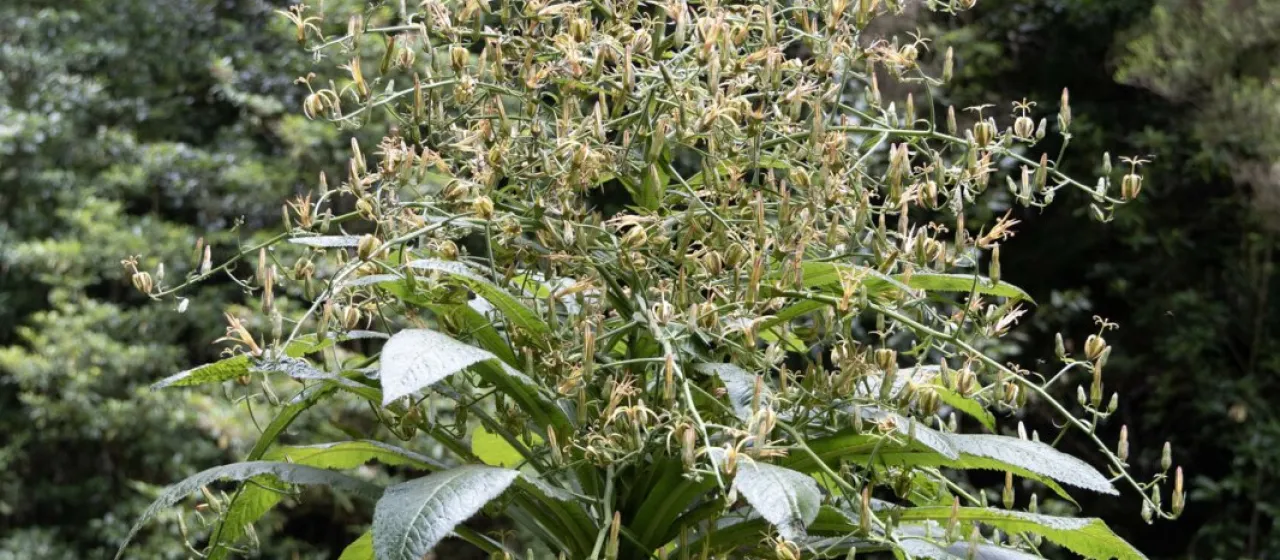
Description
Musschia wollastonii is a striking herbaceous plant species belonging to the Campanulaceae family. It is a rare endemic native exclusively to the island of Madeira. Known for its distinct architectural appearance, it features a large rosette of leaves, making it a focal point in specialized botanical collections and ornamental horticulture.
The native habitat of this plant consists of moist, rocky slopes in the humid subtropical climate of Madeira. Biologically, the plant is a monocarpic species, meaning it undergoes a long vegetative phase, blooms once with a spectacular, tall inflorescence, produces seeds, and then concludes its life cycle. This unique life strategy makes its propagation a key task for growers.
Cultivation of Musschia wollastonii requires strict adherence to environmental conditions. It thrives in cool, shaded environments, making greenhouse or conservatory settings ideal. Protection from excessive heat and direct, harsh sunlight is crucial for maintaining the vigor of the plant, as it is adapted to the mild, damp microclimates of its origin.
Soil requirements focus on high porosity and excellent drainage. A substrate consisting of peat, leaf mold, and perlite provides the necessary structure for root development. Agricultural management involves careful irrigation, ensuring the growing medium remains moist but never waterlogged. Fertilization should be moderate, focusing on balanced nutrients to support the plant throughout its extended growth period.
- Sowing in sterile, well-draining potting mix.
- Maintaining cool temperatures between 12 and 18 degrees Celsius.
- Providing adequate air circulation to prevent fungal growth.
- Avoiding water accumulation in the center of the rosette.
The primary use of this plant is purely ornamental, specifically for interior landscapes and conservatory displays. It is not a commercial crop for mass production but is highly valued by enthusiasts. Common challenges include root rot caused by poor soil drainage and pest infestations such as aphids or spider mites, which can be managed with standard integrated pest management practices.